Ranking
#19

Ranking
#19
Followers
250.4 M
Digital presence
Official profiles, streaming and discovery.
What a good fan recites by heart (or pretends to).
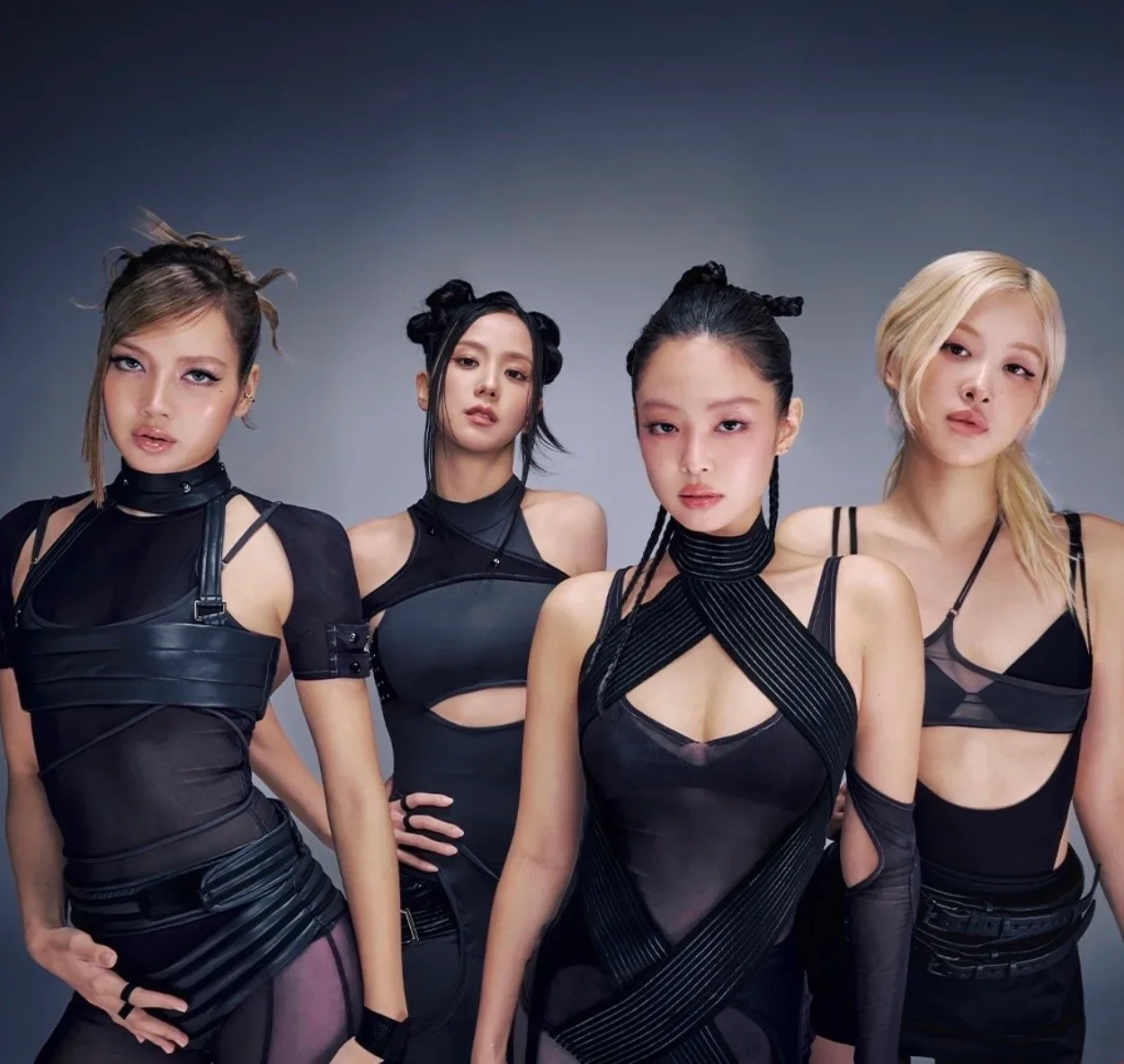
BLACKPINK entered K-pop like a sharpened, visual, self-aware formula: four members, fewer releases than many peer groups, an image polished to the smallest detail and songs built to sound like grand entrances. Instead of growing through accumulation, they grew through concentration. Every comeback felt like an event, every teaser like an alarm for the fandom, every video like an explosion of styling, choreography, luxury, attitude and phrases designed to be repeated. The paradox is that, with a relatively compact discography, BLACKPINK ended up occupying a huge space in global pop culture.
Formed in Seoul under YG Entertainment, the group debuted in 2016 with Jisoo, Jennie, Rosé and Lisa, four profiles that were clearly distinct from the beginning. Jennie brought a mix of rap, cool elegance and fashion-world charisma. Lisa arrived with precise, athletic, magnetic dance energy. Rosé offered a raspy, emotional and instantly recognizable vocal color. Jisoo balanced visual presence, vocal tone and a calm strength that worked as an anchor inside the group. That division of identities was central to their success. BLACKPINK did not present itself only as a unit, but as four strong images capable of existing together and standing individually.
SQUARE ONE was an immediate introduction. “Whistle” sounded minimal, seductive and strange, with a hook that felt more elegant than explosive. “Boombayah,” by contrast, was frontal energy, party, shout and movement. From the debut, the duality of the name was already in place: BLACK and PINK, hardness and shine, attitude and charm, impact and color. That logic became their signature. BLACKPINK could sound intimidating without ceasing to be pop, sophisticated without losing its hook, global without fully erasing its Korean girl-crush roots.
The early years built unusual expectation. “Playing with Fire” and “Stay” showed that the group was not only about club impact; there was also melancholy, melody and a softer sensitivity. “As If It’s Your Last” opened a brighter lane, almost summer-pop, while keeping the phrasing and choreography that separated them from many contemporary acts. Then came “DDU-DU DDU-DU,” probably the moment BLACKPINK stopped being an international promise and became a global machine. The video, the tanks, the colors, the finger-gun gesture, the heavy beat and the repetitive hook created an instantly recognizable aesthetic.
“Kill This Love” pushed that scale into something more military, theatrical and monumental. BLACKPINK began to function as a spectacle of power: brass, percussion, poses, marches, set changes and a performance style built as much for the stage as for the viral clip. It was not only music; it was image in motion. That is one of the keys to their phenomenon: BLACKPINK understands pop as a complete package. Songs, yes, but also fashion, makeup, luxury, slow motion, stare, fandom, choreography and individual branding.
With The Album, the group stepped more directly into the global market. “How You Like That” was a comeback of survival and revenge, built around a simple but lethal phrase. “Ice Cream,” with Selena Gomez, moved toward lighter, brighter international pop. “Lovesick Girls” revealed a more emotional dimension: girls wounded by love but still willing to run toward chaos. “Pretty Savage” reinforced the arrogant and competitive side. The album made clear that BLACKPINK could move through several registers without losing its center: confidence, contrast, visual impact and a sound blending K-pop, hip-hop, EDM and Western pop with commercial precision.
Born Pink confirmed their position as one of the biggest girl groups in the world. “Pink Venom” worked as a comeback statement: sample, rap, percussion, venom, fashion, cultural references and a sense of calculated excess. “Shut Down” used a classical Paganini gesture as if to close the argument: they were not asking for permission, they were shutting the conversation down. That era also confirmed something already visible: BLACKPINK was not only competing within K-pop, but inside global pop, stadium touring, international festivals and the luxury industry.
The members’ solo careers expanded the phenomenon even further. Jennie, Jisoo, Rosé and Lisa began building their own careers, fashion identities, musical projects, acting work, collaborations and personal companies. That could have weakened the idea of the group, but it also made it more interesting. BLACKPINK became a meeting point for four global brands that, when reunited, do not lose individuality. The tension between group and solo identity is part of their mature phase: they are no longer only idols inside a collective structure, but artists with individual weight returning to a shared platform.
The return with “JUMP” and the mini album DEADLINE showed a group fully aware of its own scarcity. After years in which each member explored individual paths, BLACKPINK came back with the energy of a reunion-event. “JUMP” connected with the dance floor through a direct stadium-and-festival logic, while DEADLINE confirmed that the project was still alive, not merely as nostalgia for an earlier era, but as an active force inside the present of global K-pop. The DEADLINE tour reinforced that idea: BLACKPINK still works as a massive physical experience, not only as a digital memory.
BLACKPINK matters because they changed the standard for what a K-pop girl group could become in international culture. They were not the first to open doors, but they carried the combination of music, fashion, visuality, social platforms and fandom to a scale that is difficult to replicate. Their strength lies in precision: few releases, enormous expectation, four clear identities, videos designed as pop monuments and a relationship with BLINK that turns every move into an event. At their best, BLACKPINK does not sound like abundance; it sounds like concentrated impact.
Main genre
K-POP
Main subgenres
Like a superfan's list — except verified, with sources and links.
Jun 23 – Jul 09, 2023
London · United Kingdom
Past
21–Apr 23, 2023
Indio, California · United States
Past14–Apr 16, 2023
Indio, California · United States
Past19–Apr 21, 2019
Indio, California · United States
Past12–Apr 14, 2019
Indio, California · United States
PastWhat we managed to link to the concert archive. If a date is missing, tell us — happens to us too.
No linked concerts
Every concert and festival of the year, traced on the globe. Hit play and follow the route stop by stop.
Photos from the public archive.
Recent coverage linked to the artist.


Close by genre and social signal.
No related artists
When there is enough genre signal, they will appear here.