






Ranking
#64

Ranking
#64
Followers
102.8 M
Digital presence
Official profiles, streaming and discovery.
What a good fan recites by heart (or pretends to).
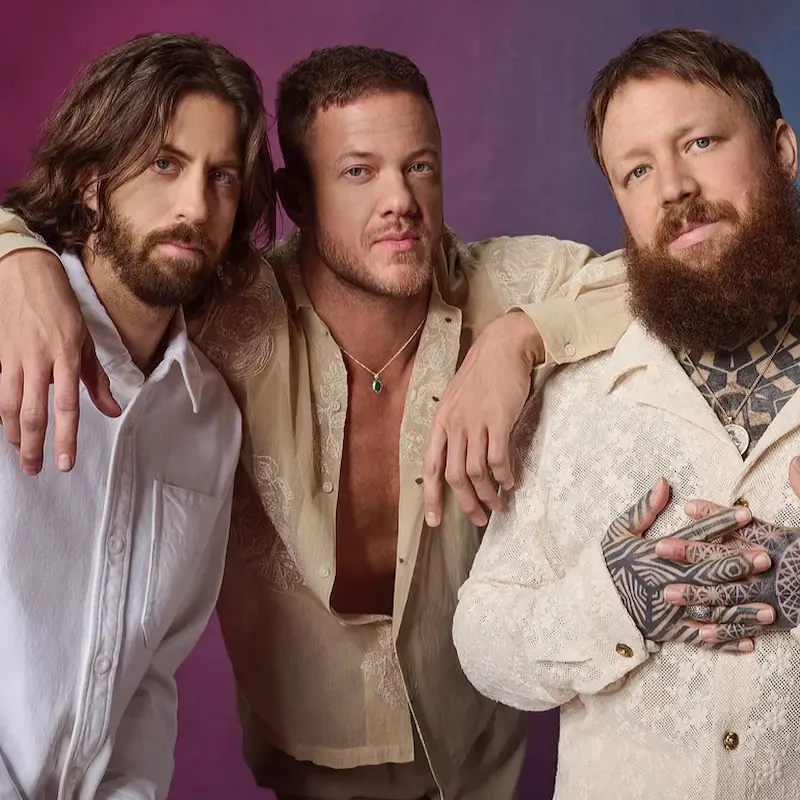
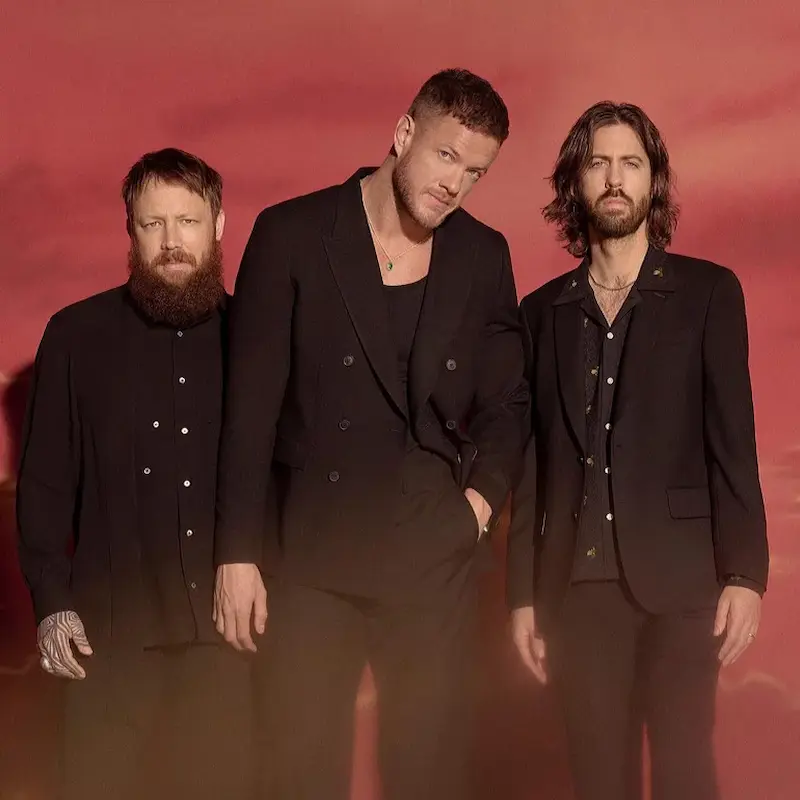
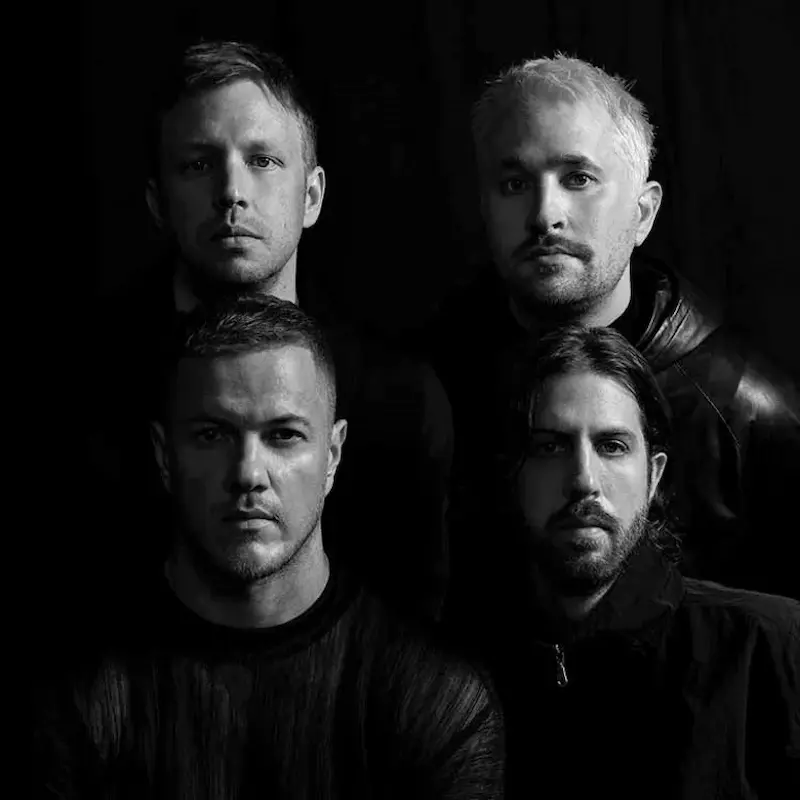
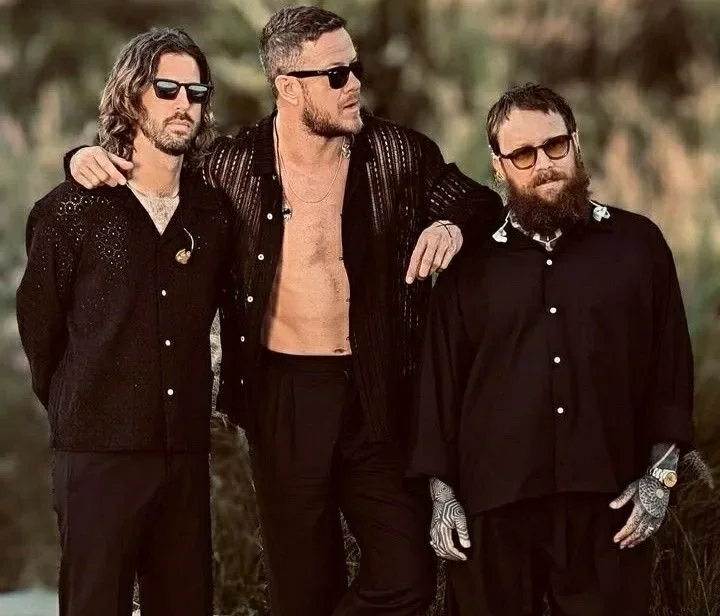
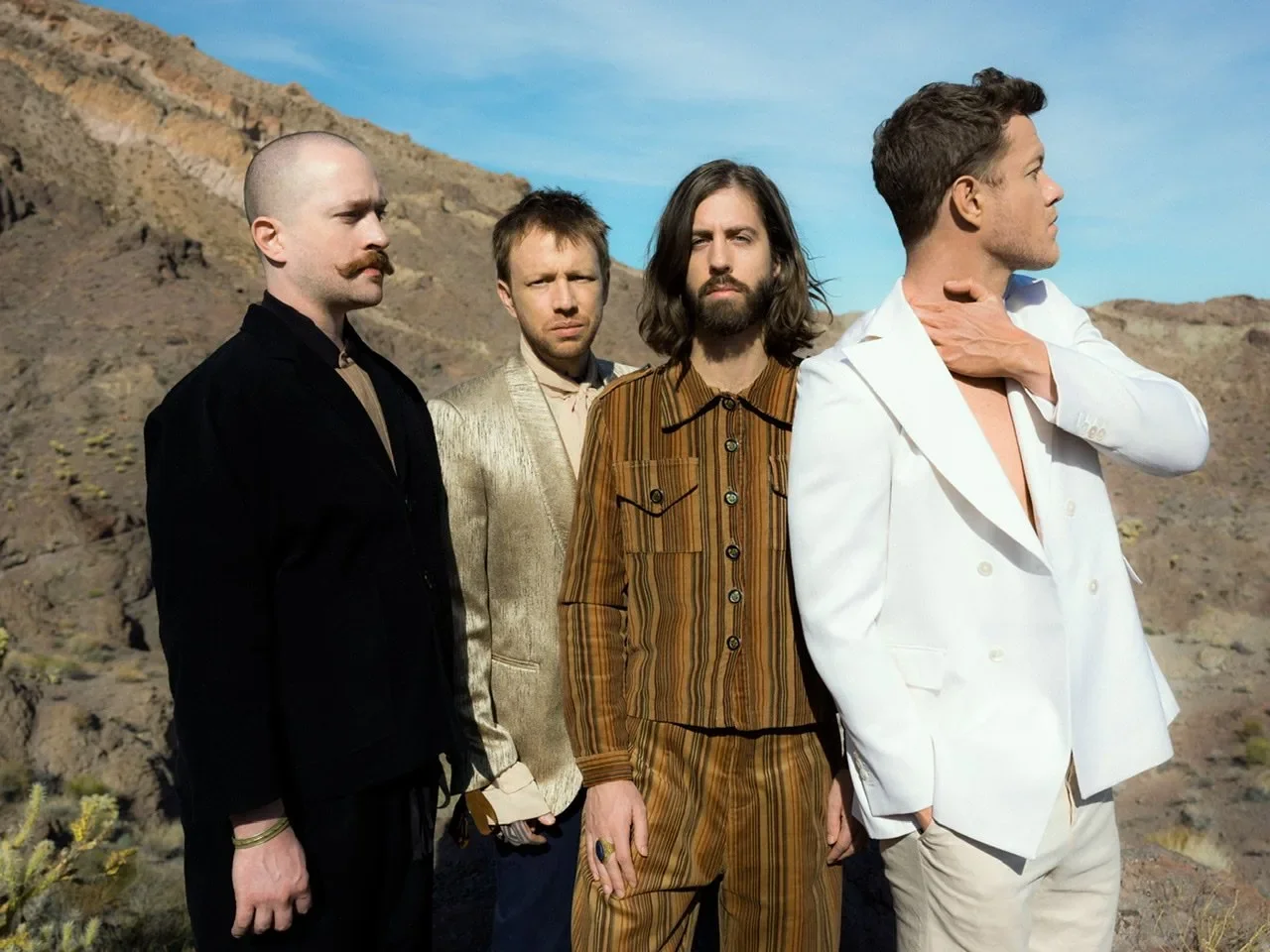
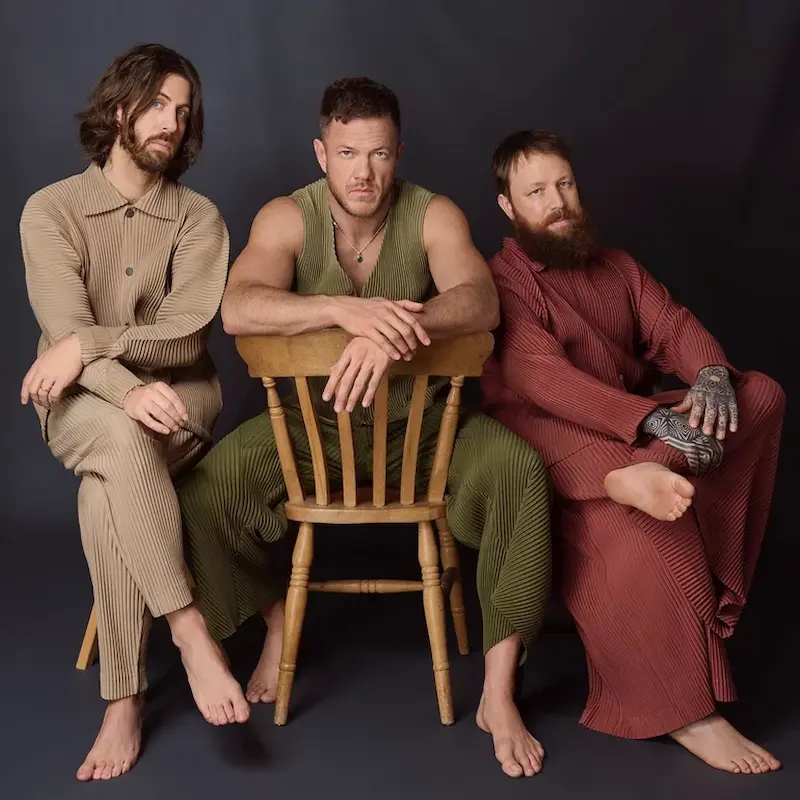
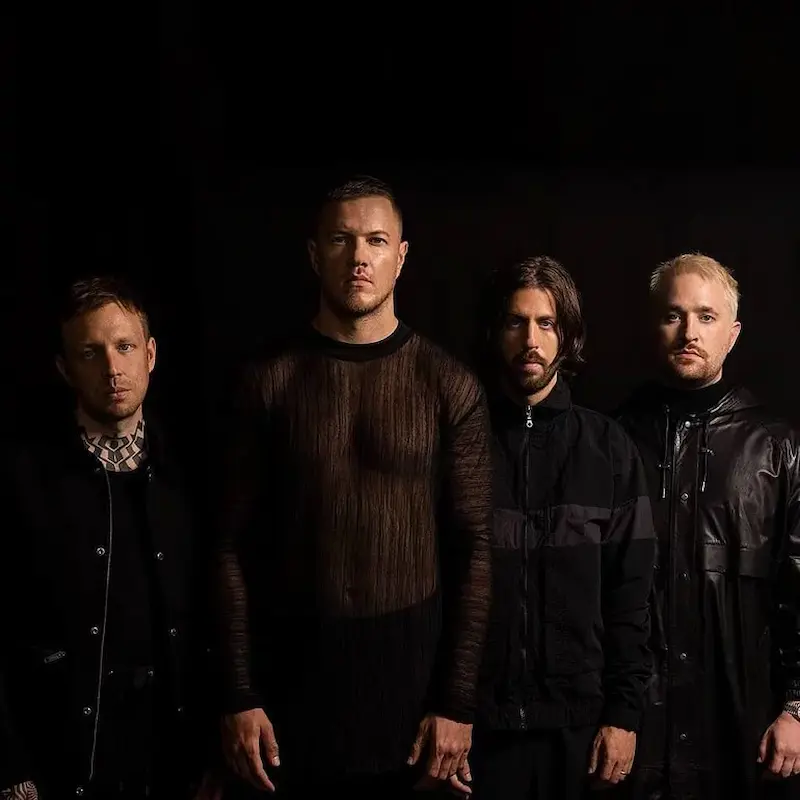
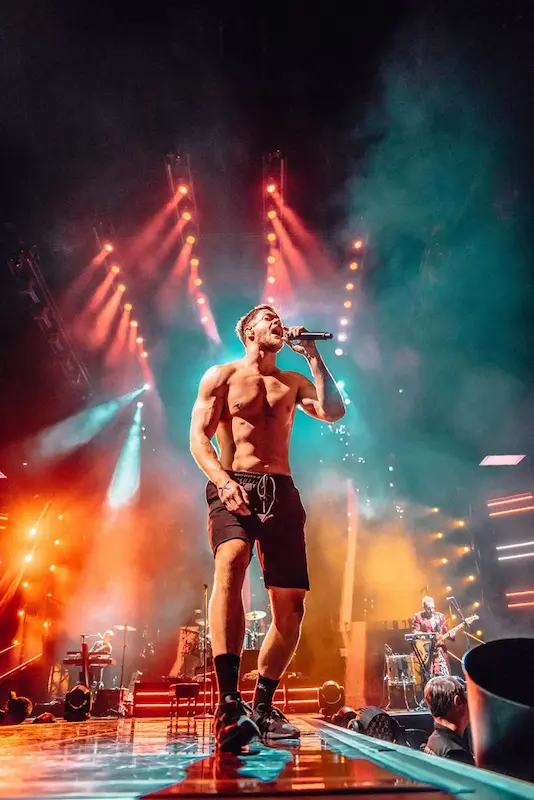
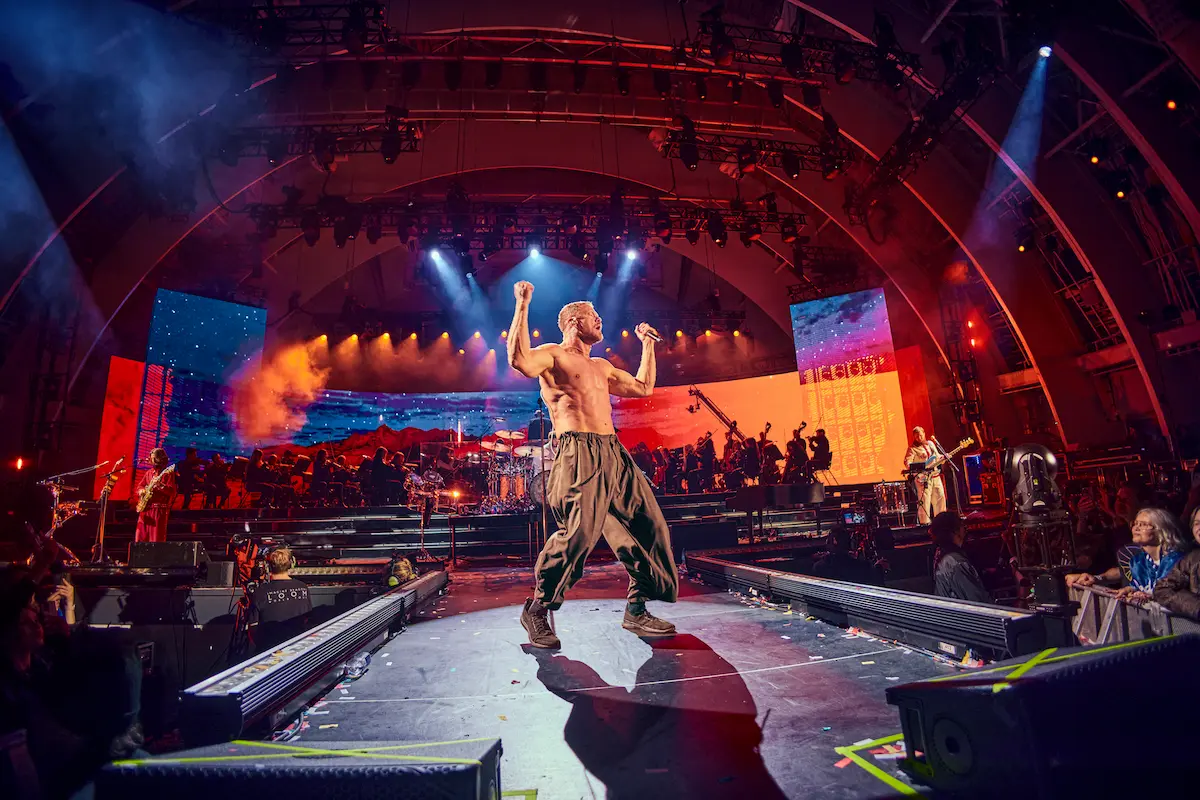
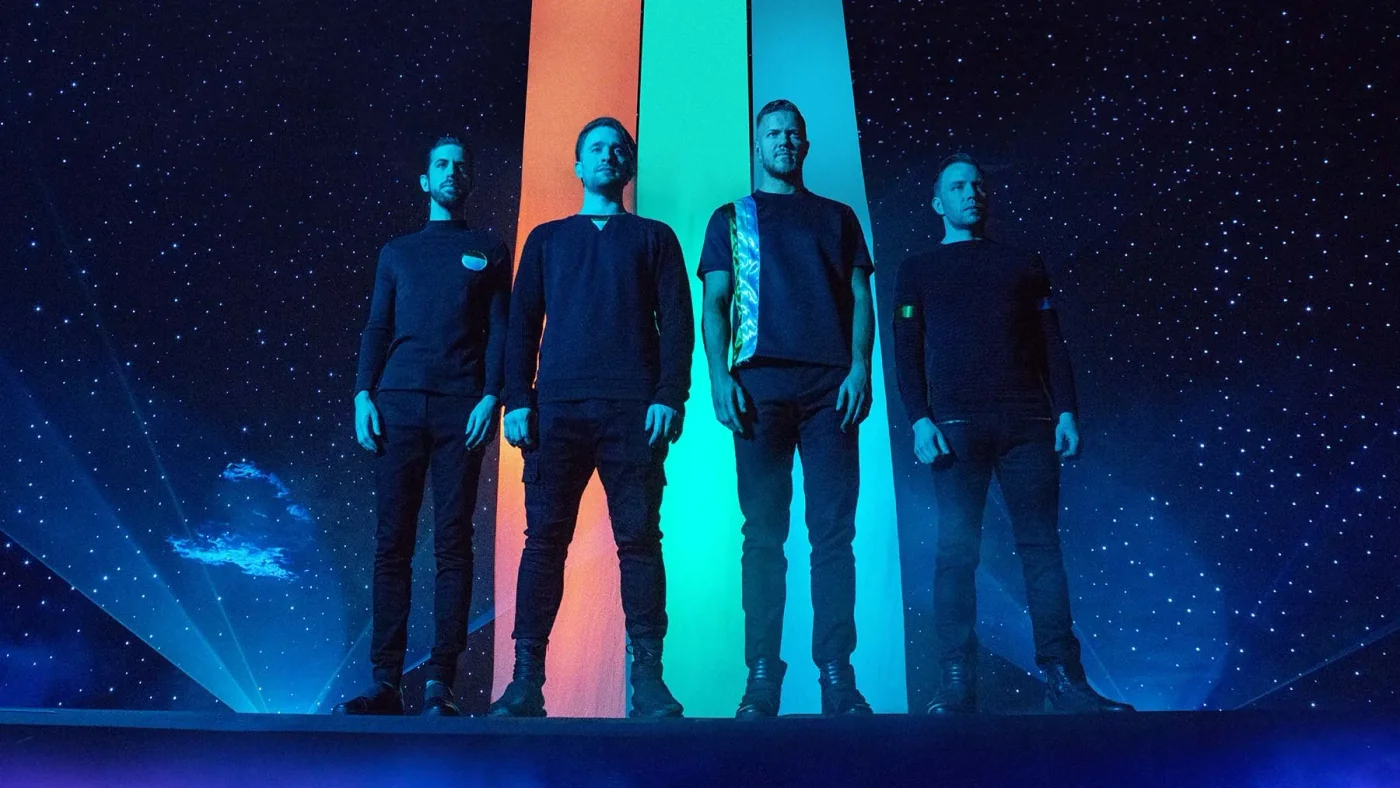
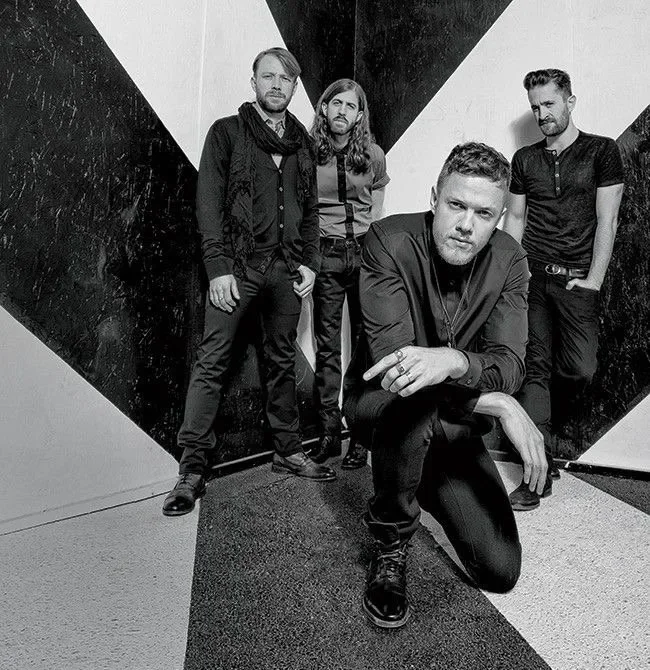
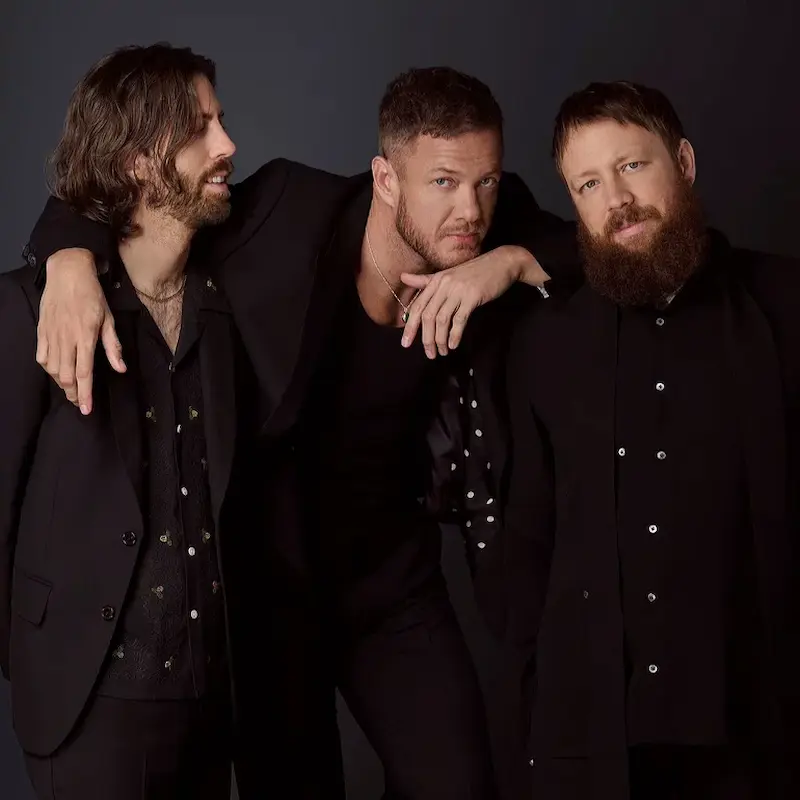
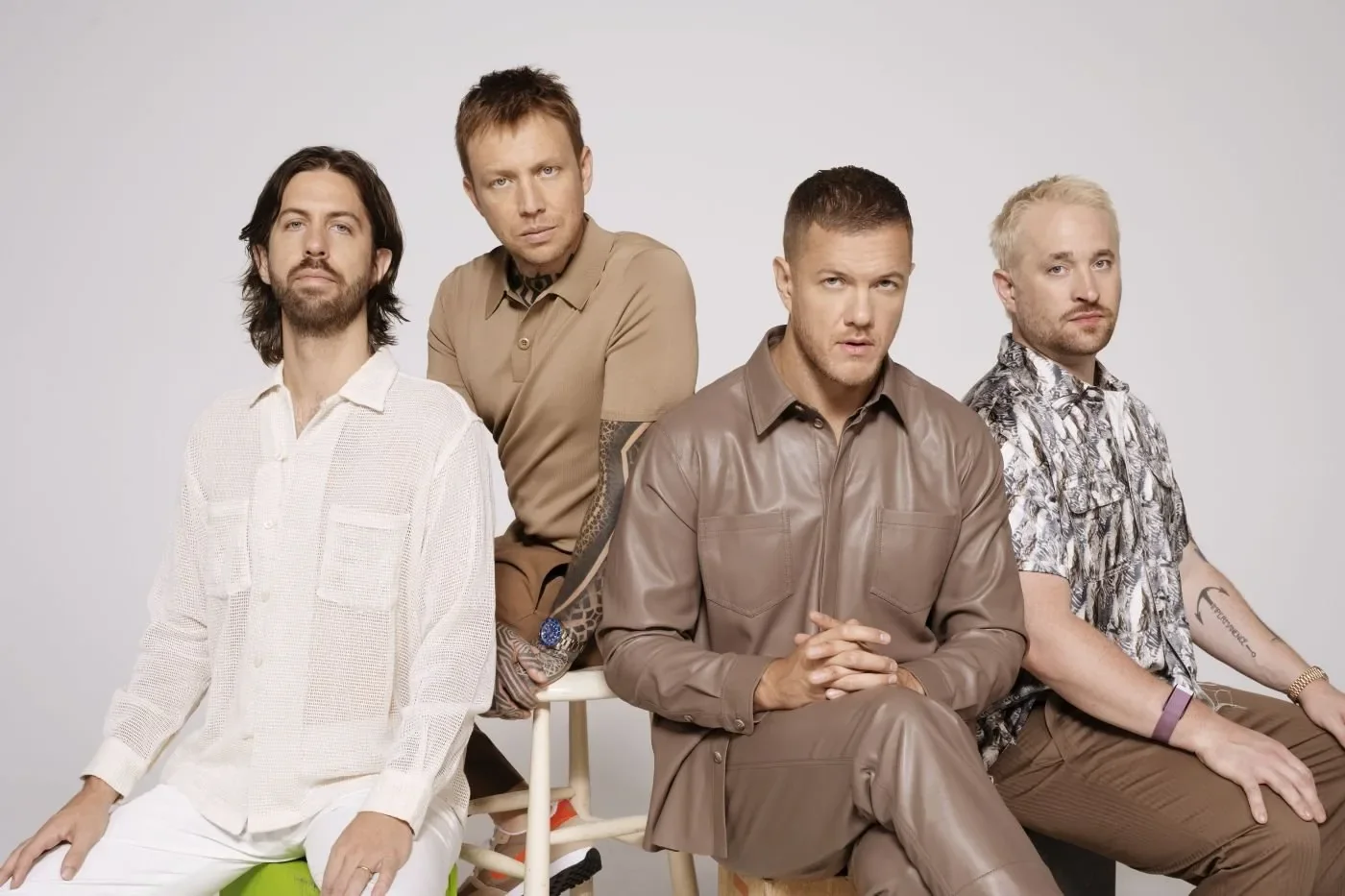
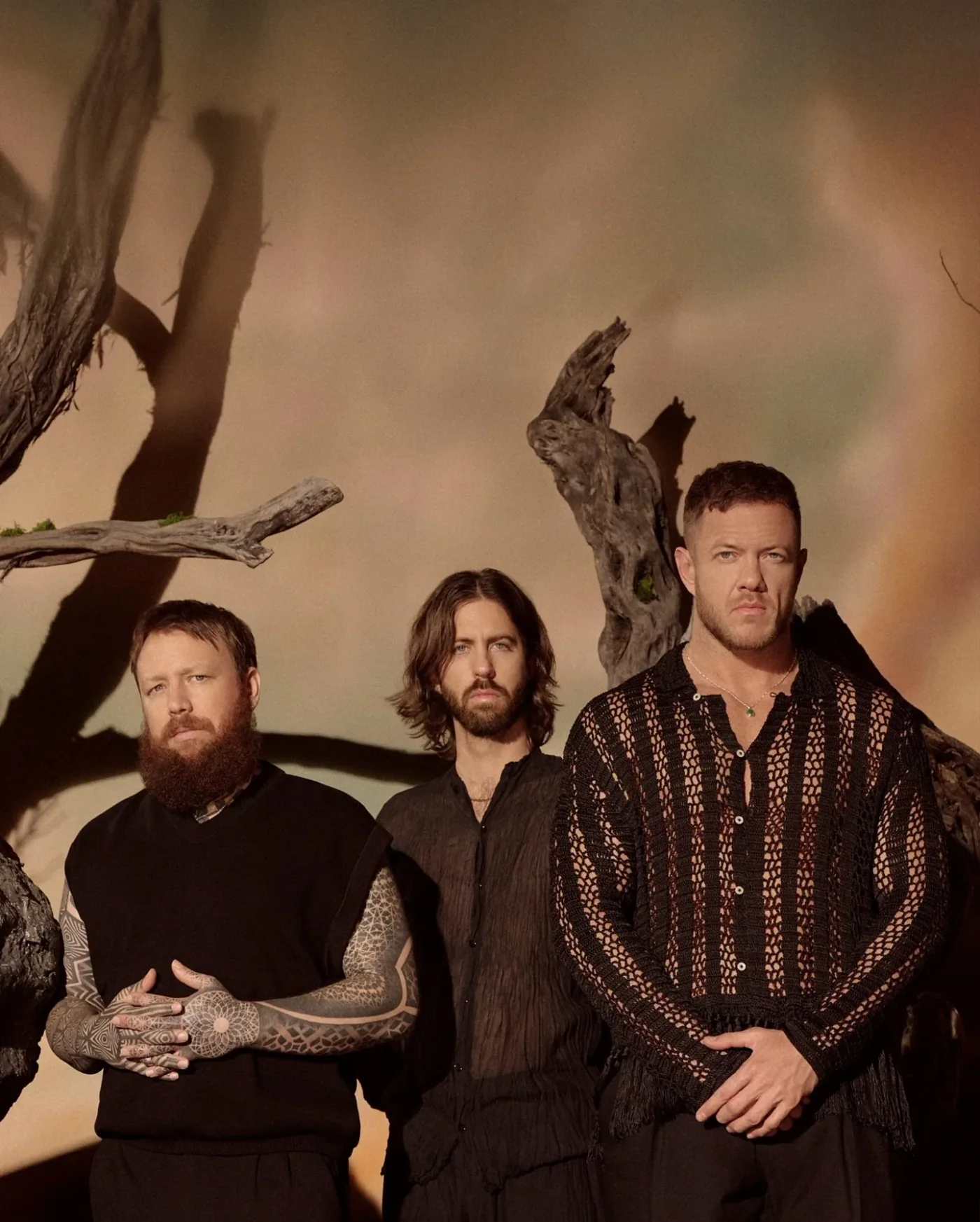
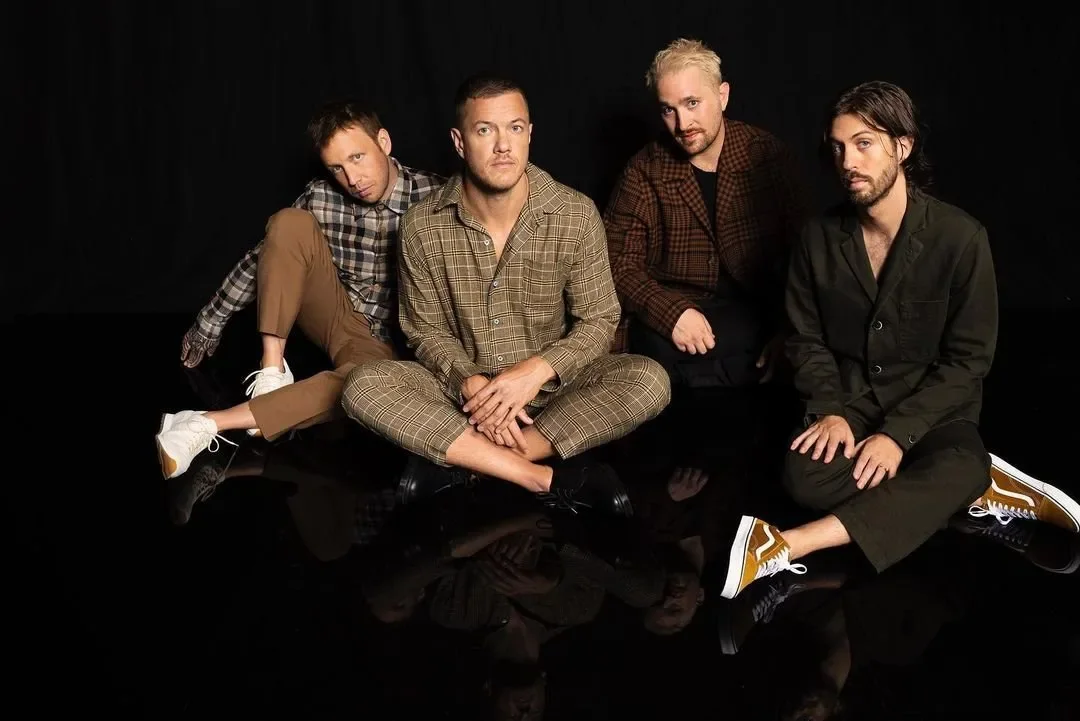
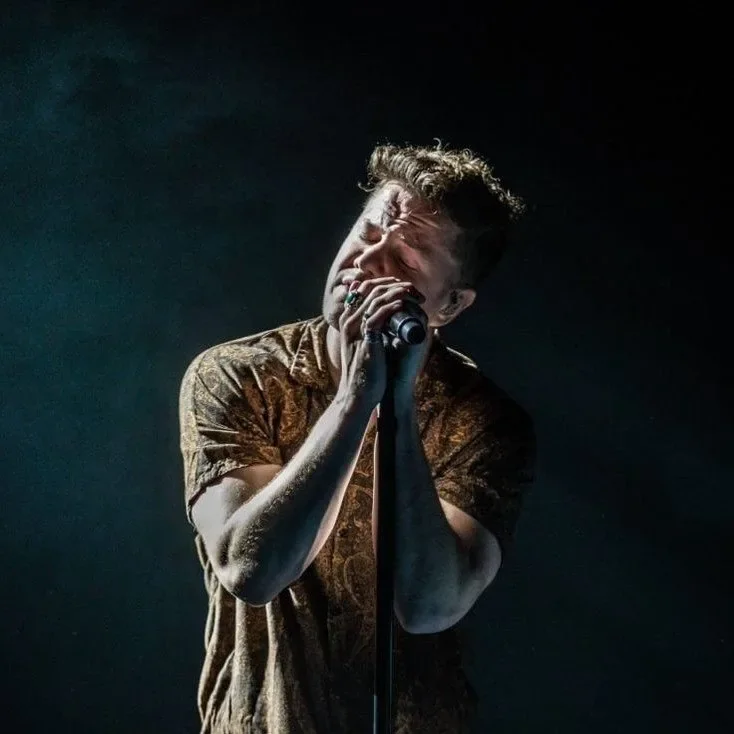
Imagine Dragons is one of those bands that forces people to debate what “rock” really means in the twenty-first century. For some purists, their sound sits too close to pop, electronics and stadium spectacle; for millions of listeners, that is exactly where their strength lies. The band took guitars, huge drums, synthesizers, explosive choruses, emotional tension and global-pop structures and built songs that do not feel designed for a small room, but for a crowd with its arms in the air. Imagine Dragons does not sound like a band trying to protect a label. It sounds like a band trying to make an emotion fill all the available space.
Formed in Las Vegas, Nevada, Imagine Dragons emerged far from the traditional capitals of American rock. That city matters more than it may seem. Las Vegas is excess, lights, spectacle, artifice, drama, survival and entertainment on a giant scale. Some of that filters into their music: the feeling that every song needs a powerful entrance, a clear emotional center and an ending visible from the last row. Dan Reynolds, Wayne Sermon, Ben McKee and, for many years, Daniel Platzman developed an identity where alternative rock mixed with almost tribal percussion, electronic textures, direct melodies and a desire to connect without too much irony.
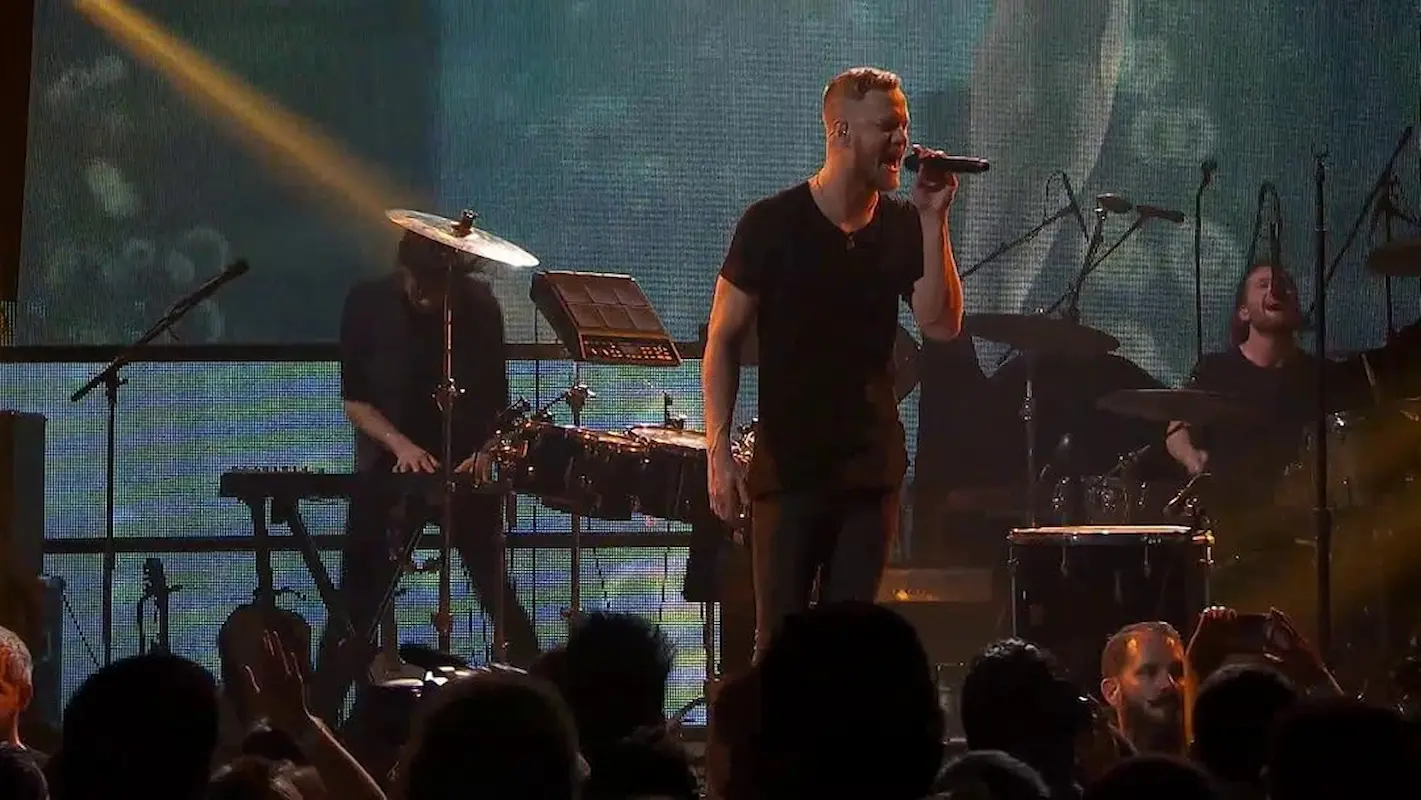
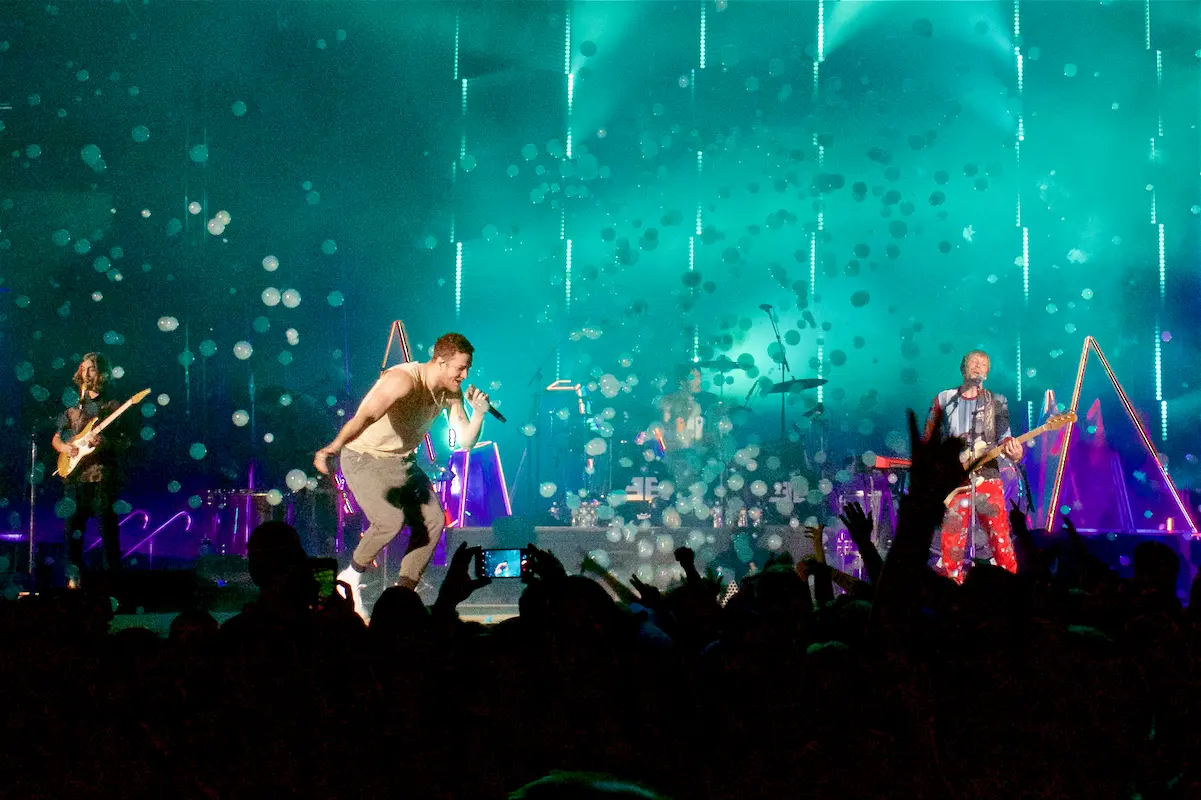
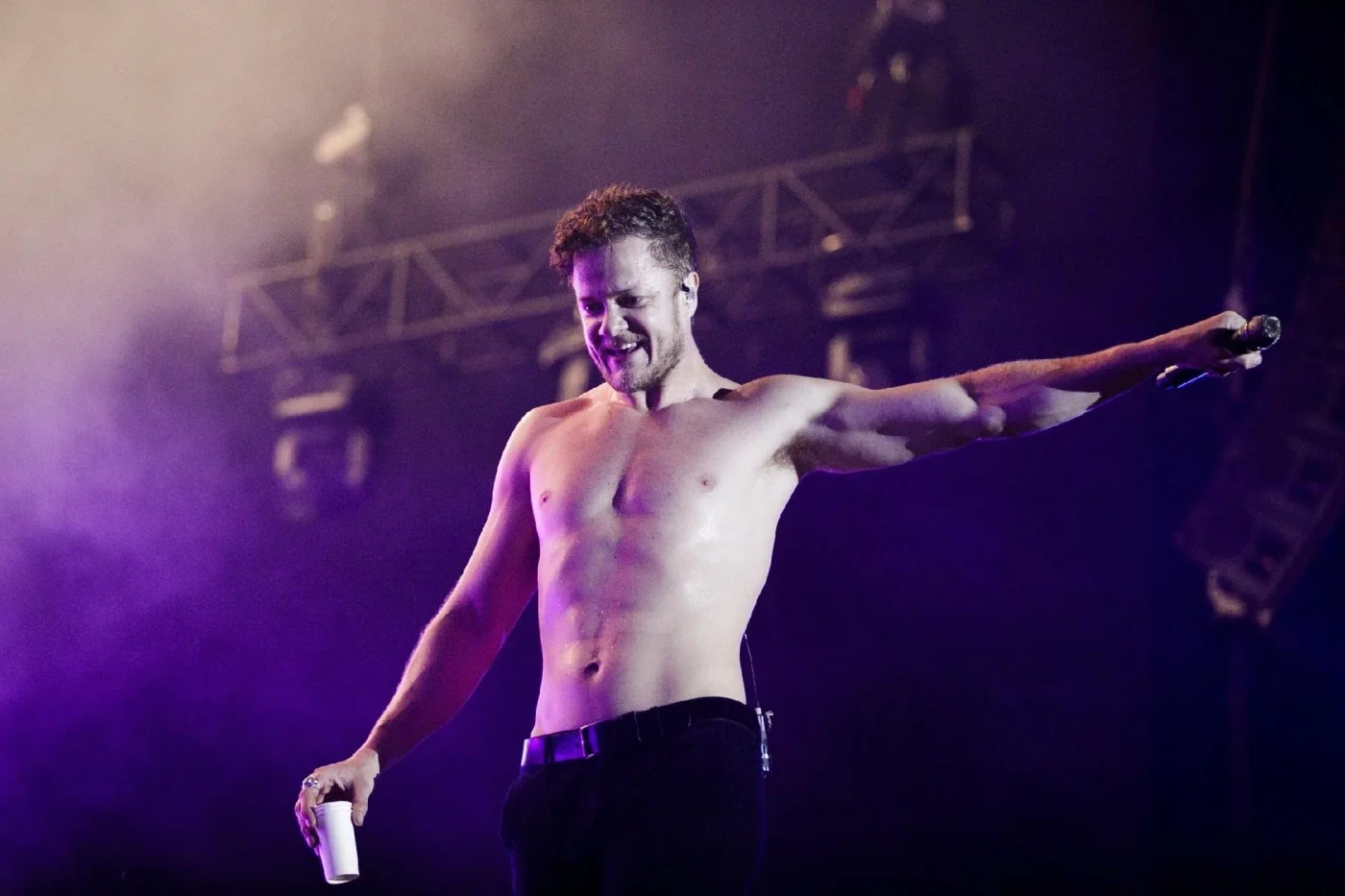
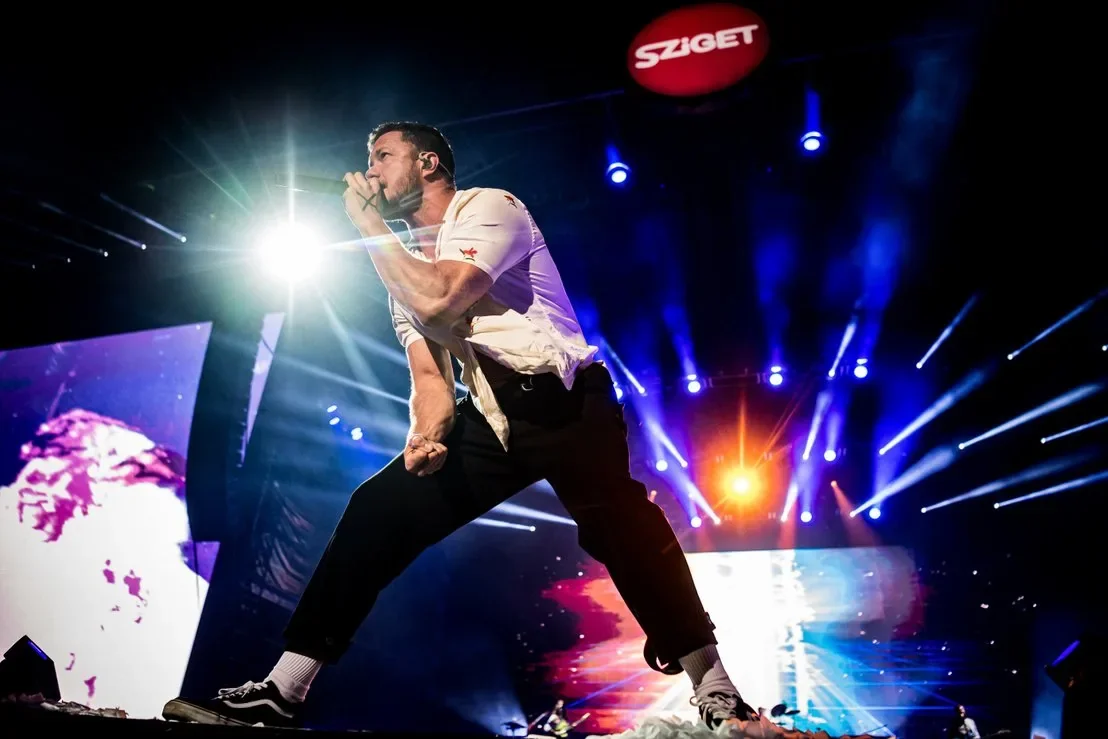
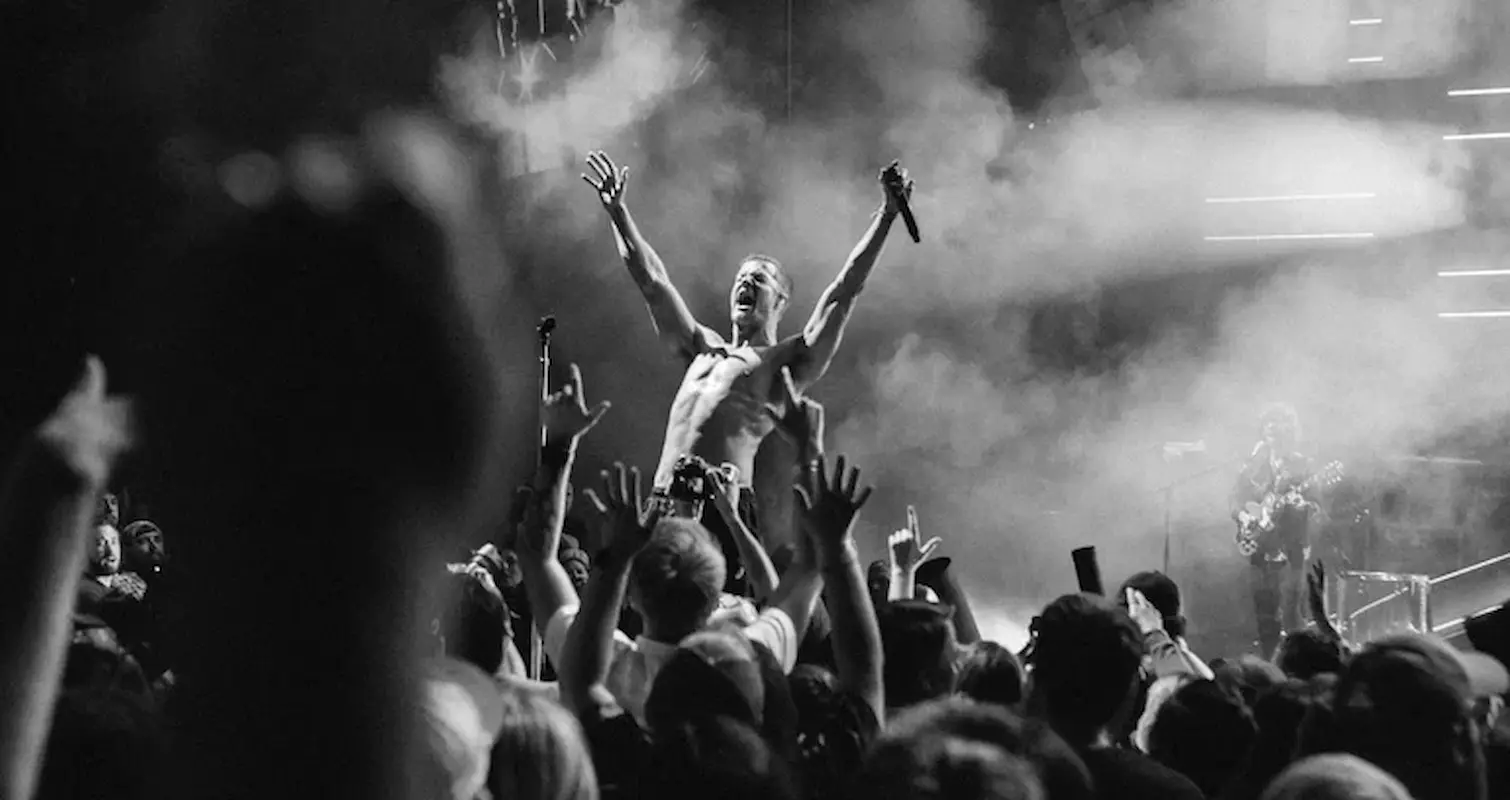
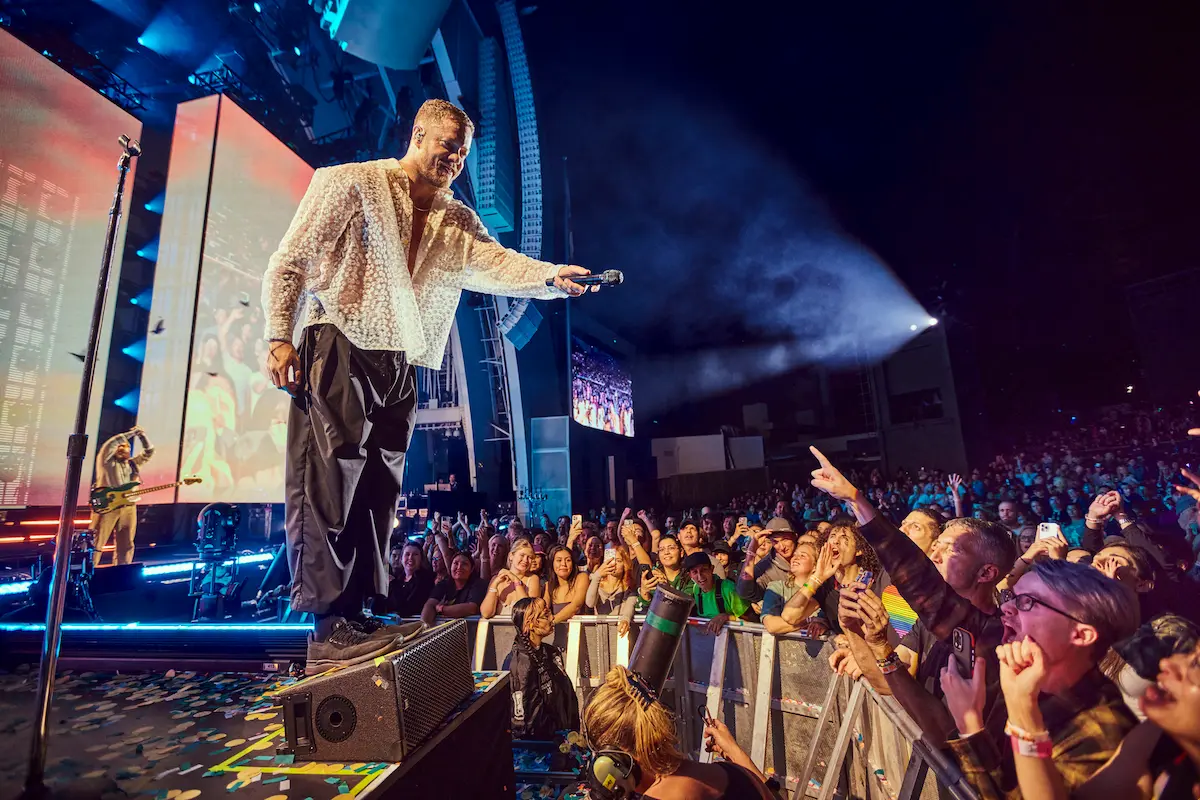
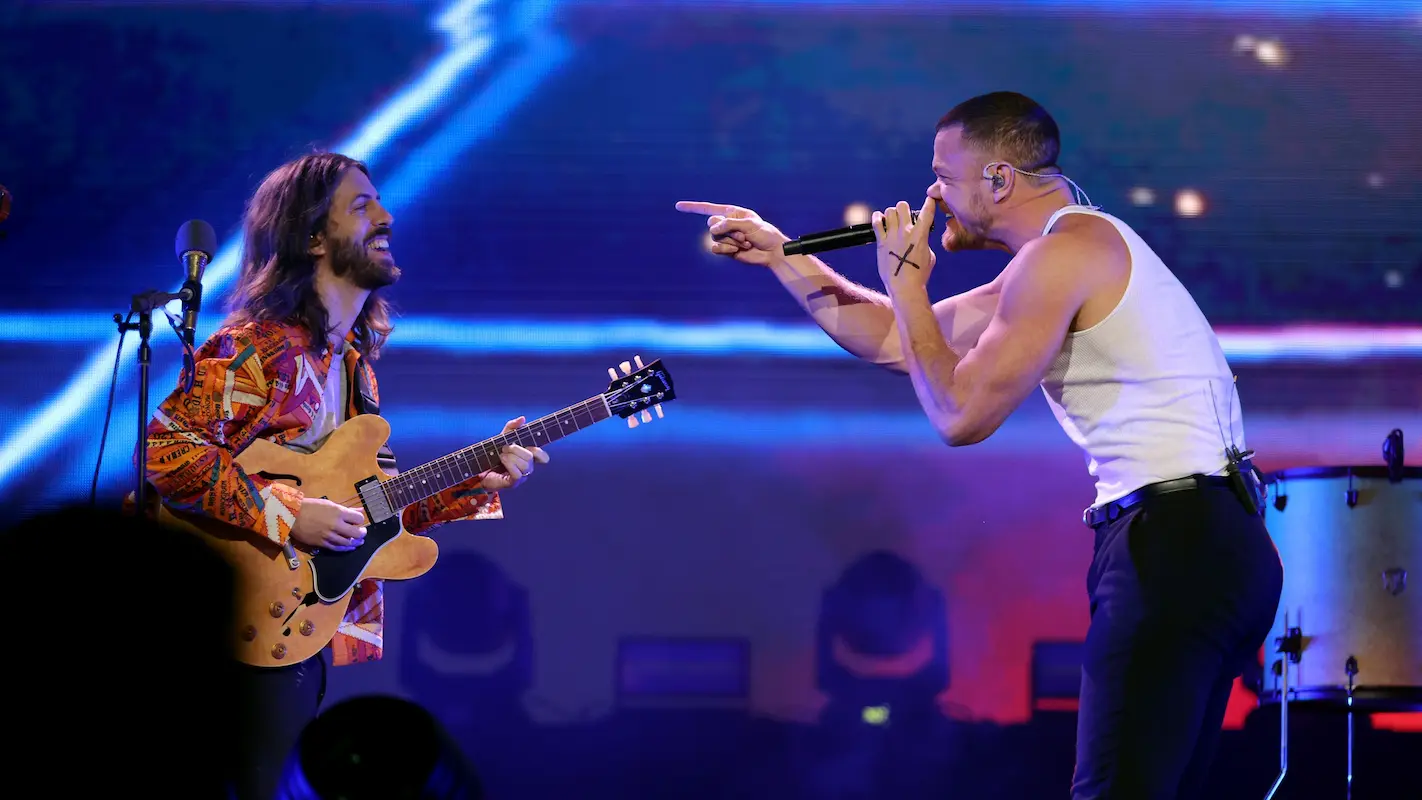
Before the major explosion, the band went through the real work of any group trying to survive: playing live, building repertoire, making mistakes, finding the right lineup, improving songs and learning how to read an audience. That local period was essential because Imagine Dragons did not begin only as a studio product. Their music has always carried stage logic. Even their most produced songs seem to think about how an audience will react: when it will sing, when it will jump, when it will go quiet, when it will feel that the song is speaking directly to it.
*Night Visions* changed their story. “It’s Time” arrived as a bright declaration of identity: stadium folk-pop, claps, mandolin, perseverance and a central line that suggested change does not always mean betrayal. But the real earthquake was “Radioactive.” With its mix of heavy percussion, distorted bass, apocalyptic atmosphere and gigantic chorus, the song turned Imagine Dragons into a global force. It was not traditional rock, not pure electronic music, not conventional pop. It was hybrid, muscular, cinematic and instantly recognizable. “Demons” completed the equation from a more vulnerable place: a song about inner darkness, guilt and the fear of hurting others, wrapped in a massive melody.
That revealed one of the band’s central traits: Imagine Dragons makes huge songs about emotions that many people experience privately. Anxiety, guilt, pain, resilience, anger, the desire for transformation, faith, fear, grief and hope appear again and again in their catalog. Sometimes their lyrics are direct to the point of simplicity, but that directness is part of their impact. They do not try to hide feeling behind too much sophistication. They want the message to arrive quickly, almost like a drum hit.
*Smoke + Mirrors* tried to expand the universe after the initial success. “I Bet My Life” explored family conflict and reconciliation. “Shots” showed a brighter, new wave side. “Gold” and “Smoke and Mirrors” played with ambition, emptiness and public image. It was a more restless album, sometimes stranger, less seamless for the mass audience than their debut, but important because it proved the band did not want to repeat the exact mold of “Radioactive.” Imagine Dragons has always lived between two impulses: making enormous songs and exploring personal vulnerabilities that do not always fit neatly with the size of their sound.
With *Evolve*, the band reached another commercial peak. “Believer” turned pain into fuel. “Thunder” transformed a childhood fantasy of triumph into an almost minimal pop chant. “Whatever It Takes” pushed the idea of overcoming toward a more urgent rhythm. That era reinforced the idea of Imagine Dragons as a band of motivational anthems, something that can sound dismissive to certain critics but explains much of their popular connection. Their songs work in stadiums, gyms, trailers, sports events, video games and private moments because they have a very clear emotional architecture: tension, impact, release.
*Origins* continued that route with “Natural,” “Bad Liar” and “Zero.” The band sounded increasingly comfortable inside large-scale pop rock, but also increasingly exposed to criticism because of its omnipresence. Imagine Dragons became impossible to ignore: too big to be alternative, too rock to be pure pop, too pop to satisfy the guardians of rock. That uncomfortable position is part of their identity. They live at the center of a debate about taste, authenticity and mass appeal. And maybe that is why they matter: they show how rock in an age of streaming, playlists and global spectacle no longer behaves like the rock of previous decades.
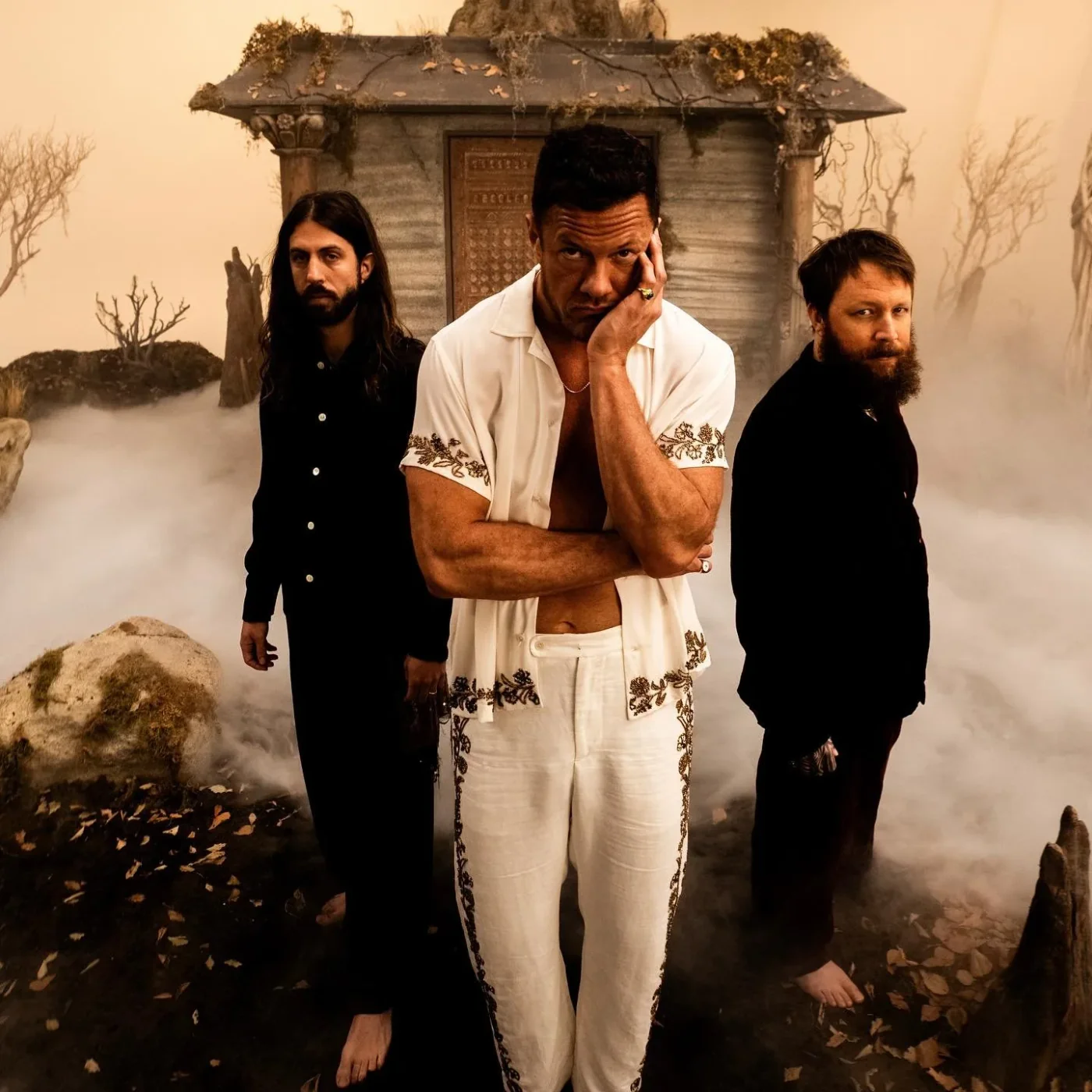
The *Mercury* era opened a more raw space. With Rick Rubin producing *Act 1*, the band approached grief, loss, mental health, sobriety, family and fragility with greater clarity. “Wrecked,” written after the death of Dan Reynolds’ sister-in-law, is one of their most direct and painful songs. “Follow You” offered another face of persistent love. “Enemy,” with JID, connected with a new generation through *Arcane*. *Mercury – Acts 1 & 2* showed that beneath the stadium machinery there was a band marked by very human wounds.
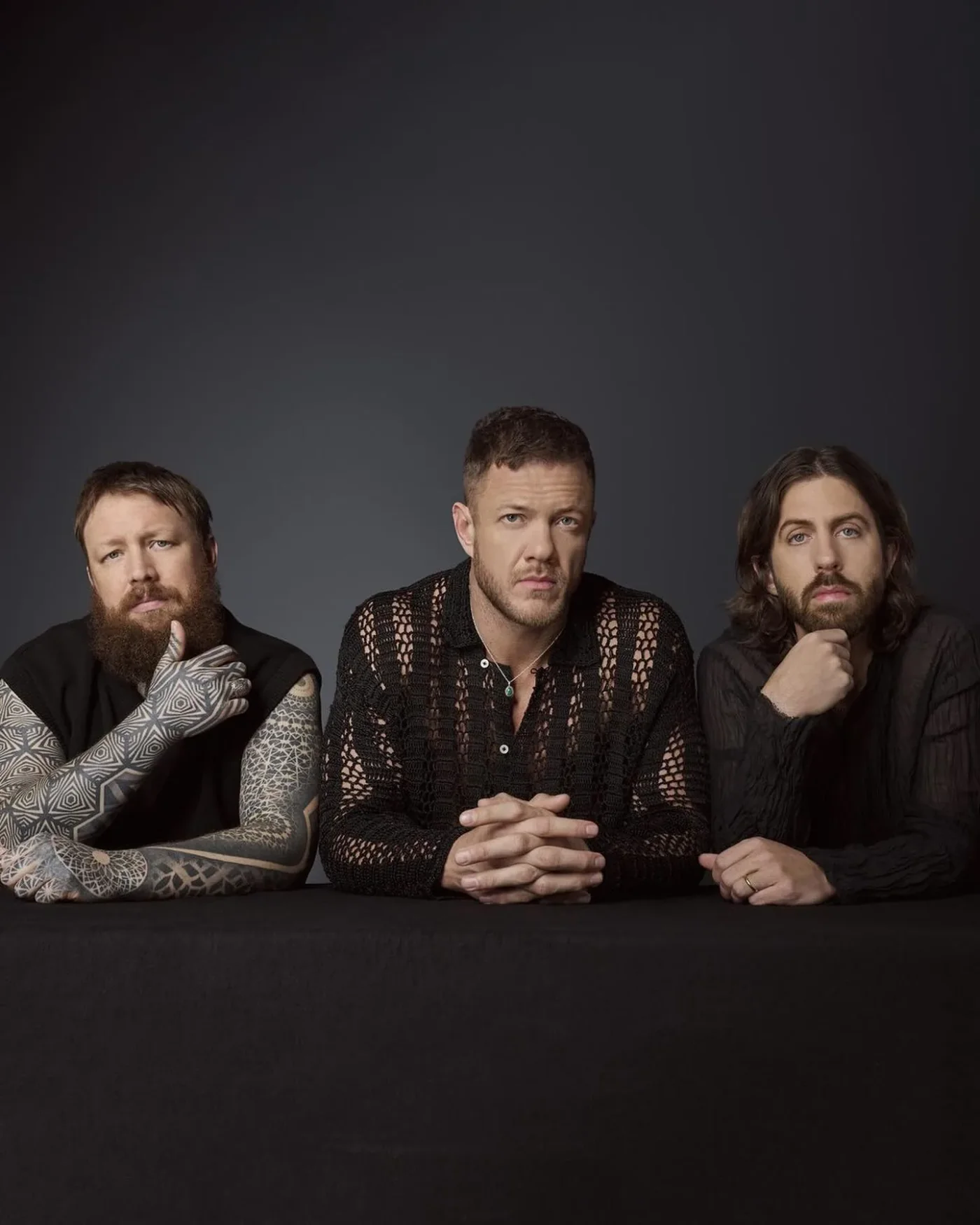
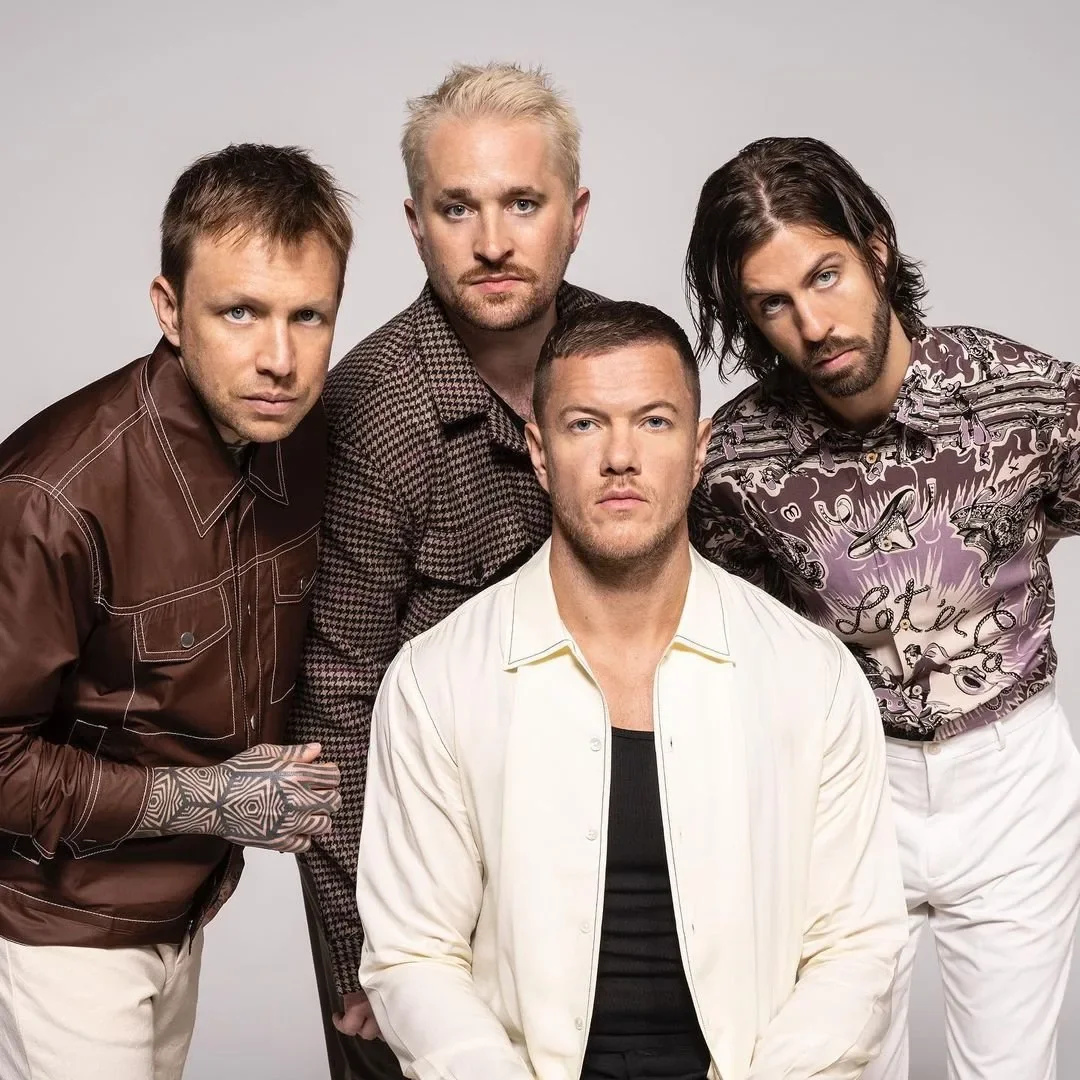
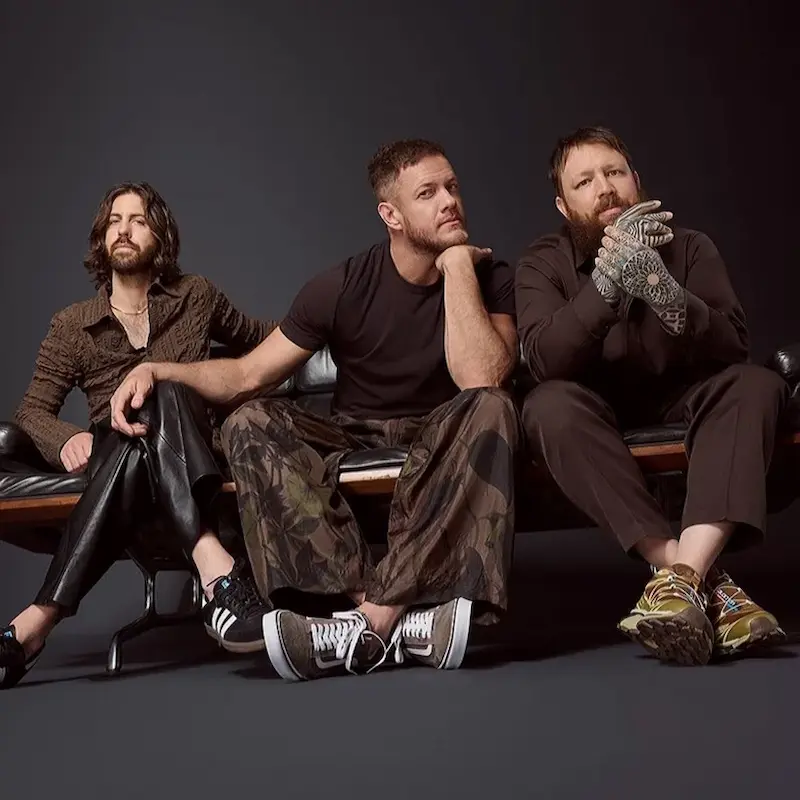
*Loom* arrived as a reset. With songs such as “Eyes Closed,” “Wake Up” and “Take Me to the Beach,” the band searched for a more compact, colorful and flexible energy after several dense years. It also arrived at a moment of internal change, with Daniel Platzman officially leaving the band to focus on film scoring. The current formation, centered on Reynolds, Sermon and McKee, keeps the project alive from a different configuration. It is not simply about continuing by inertia, but about understanding what Imagine Dragons can be after so much success, criticism, exposure and personal change.
Imagine Dragons matters because it turned large-scale emotional rock into a dominant language for the streaming era. Their legacy is not measured only in awards or numbers, but in how many people have used their songs to train, cry, get back up, drive at night, move through loss or feel powerful for three minutes. At its best, Imagine Dragons sounds like a storm designed for the mass public: direct, bright, enormous, sometimes excessive, but capable of turning a private emotion into a chorus thousands of people can sing together.
Main genre
ROCK
Main subgenres
Like a superfan's list — except verified, with sources and links.
13–Sep 22, 2024
Rio de Janeiro, Rio de Janeiro · Brazil
Past
09–Sep 10, 2023
Berlin, Berlin · Germany
Past
25–Aug 27, 2023
Reading · United Kingdom
Past
25–Aug 27, 2023
Leeds · United Kingdom
Past17–Aug 19, 2023
St. Pölten, Niederösterreich · Austria
Past
10–Aug 15, 2023
Budapest · Hungary
Past
03–Aug 06, 2023
Cluj-Napoca · Romania
PastJul 30 – Aug 06, 2023
Skanderborg, Midtjylland · Denmark
Past
06–Jul 08, 2023
Milwaukee, Wisconsin · United States
Past06–Jul 16, 2023
Québec, Québec · Canada
PastWhat we managed to link to the concert archive. If a date is missing, tell us — happens to us too.
Abu Dhabi, Abu Dhabi · United Arab Emirates
Tickets →Imagine Dragons Golden Circle Upgrade - Saturday
Every concert and festival of the year, traced on the globe. Hit play and follow the route stop by stop.
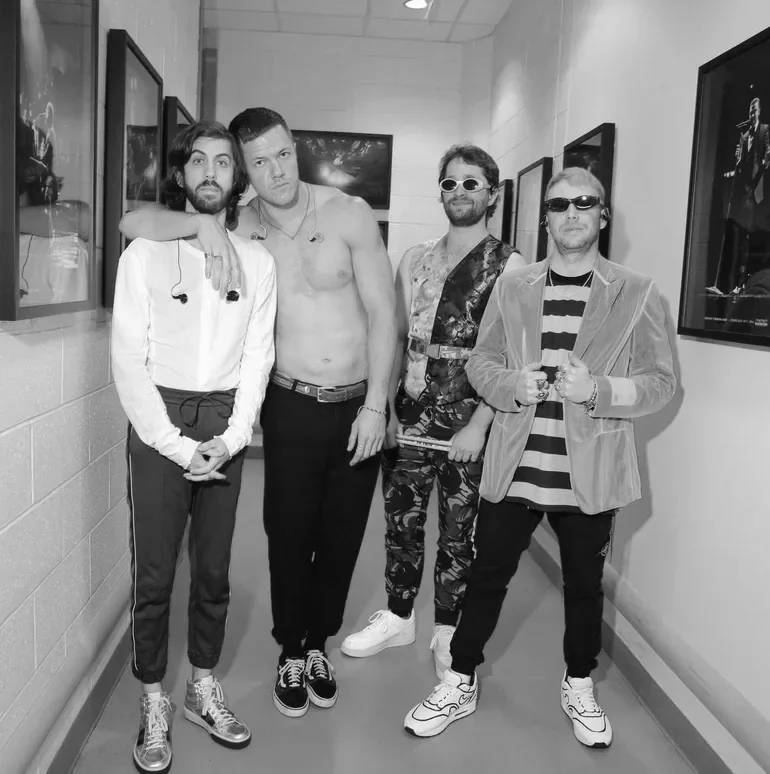
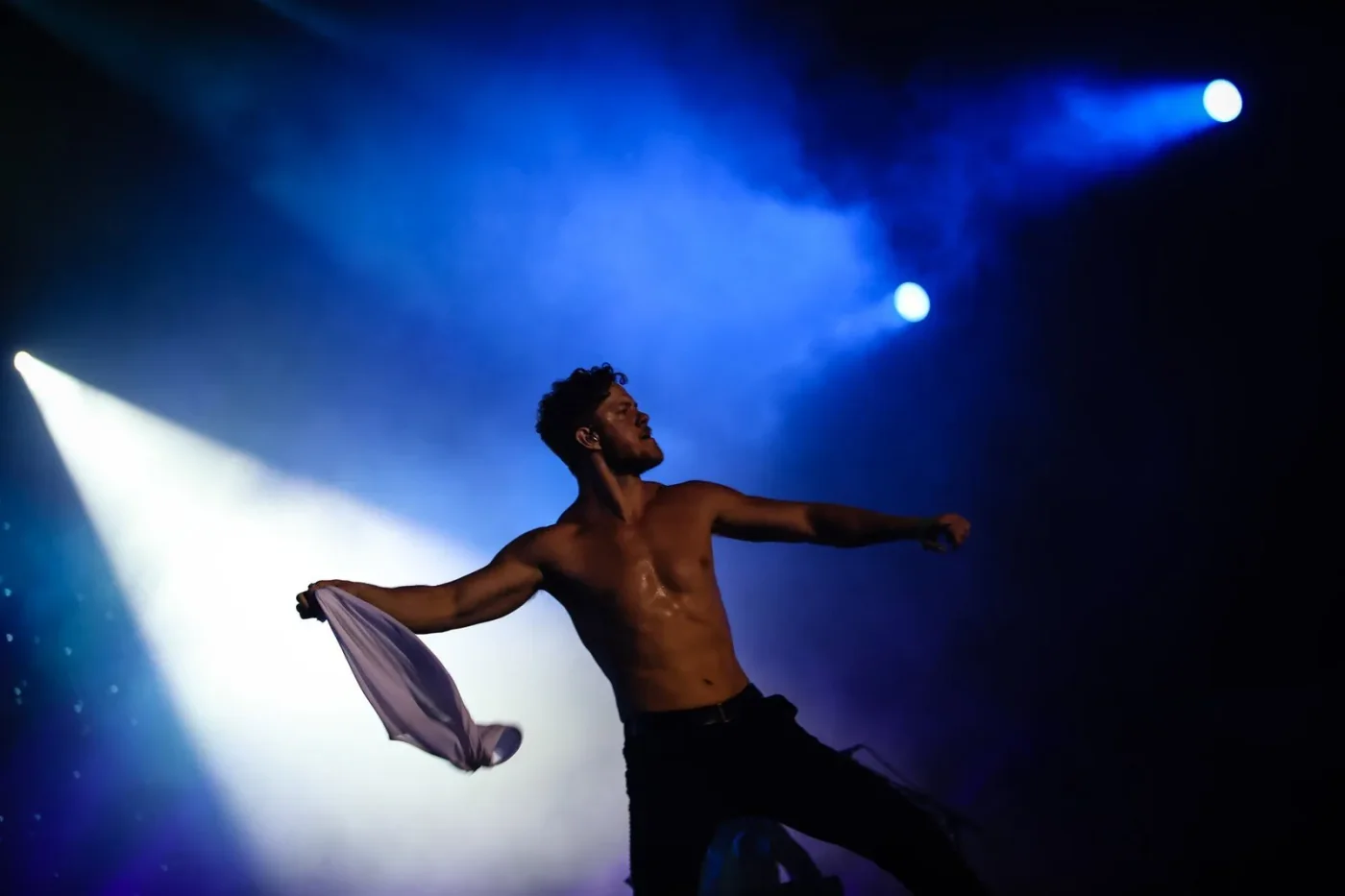
Photos from the public archive.
Recent coverage linked to the artist.
Close by genre and social signal.
No related artists
When there is enough genre signal, they will appear here.