




Ranking
#35

Ranking
#35
Followers
164.8 M
Digital presence
Official profiles, streaming and discovery.
What a good fan recites by heart (or pretends to).
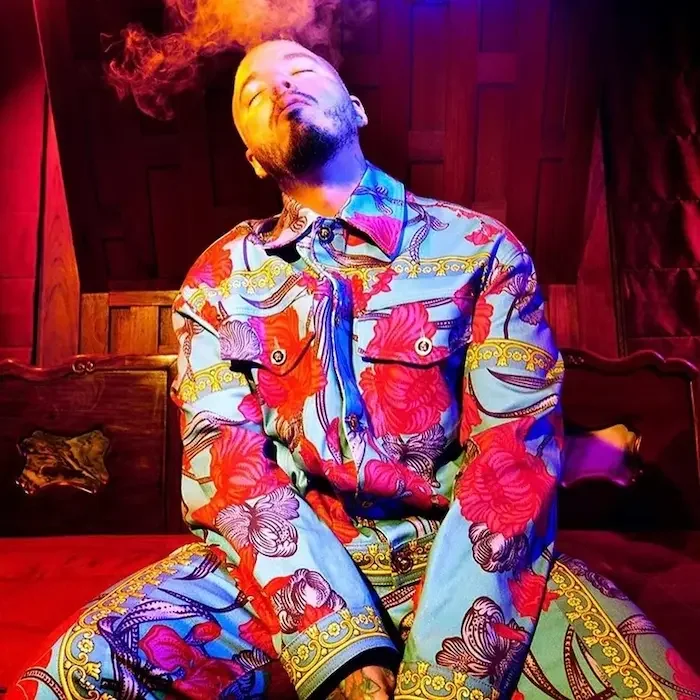
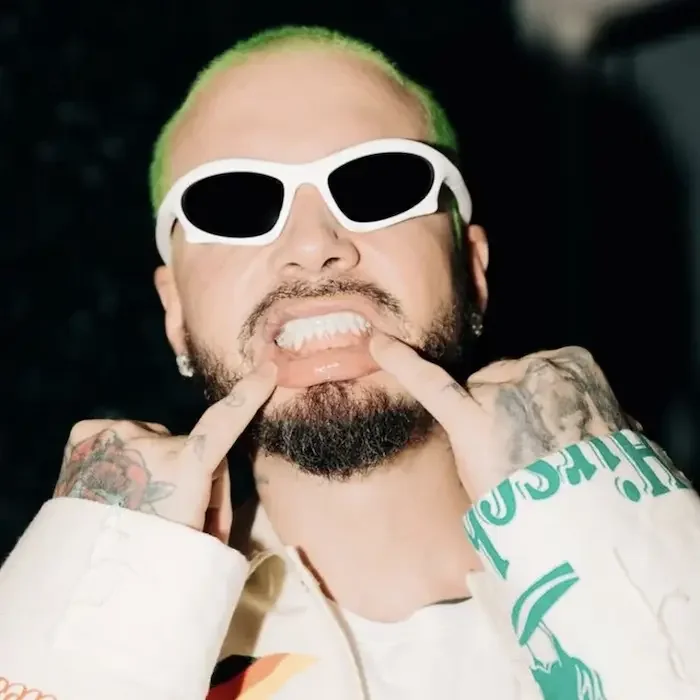
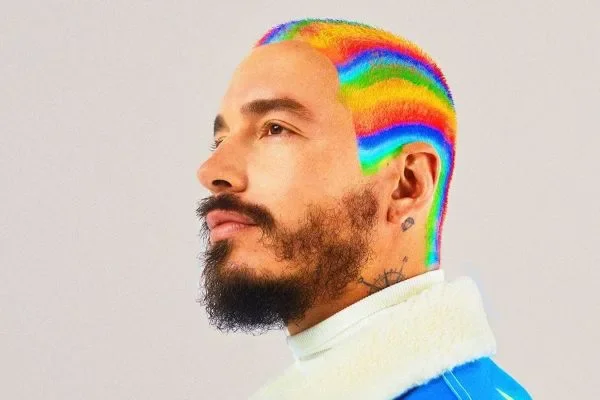
J Balvin changed what it could mean to be a global Latin star without leaving Spanish behind. His career was not built through scandal or through a permanent image of street toughness, but through something more strategic: color, design, rhythm, calm, fashion, collaboration and a very clear conviction that reggaeton could speak to the whole world without disguising itself as something else. In a genre often associated with barrio codes, competition and masculine dominance, Balvin found another route: turning Latin urbano into a pop language that felt international, visually sophisticated and emotionally wider.
José Álvaro Osorio Balvín was born in Medellín, a city that became more than his origin point. It became an essential part of his brand, pride and narrative. His relationship with music did not begin only through reggaeton. As a young person, he was exposed to rock, hip-hop, English-language music, American culture and a curiosity that later became visible in the way he mixed worlds. That combination matters because it explains why J Balvin never sounded like a local artist trying too hard to seem international. He sounded more like someone who understood that the international could be born from Medellín, from his own accent and from a highly conscious aesthetic vision.
His early years were built on persistence. Before the major stages, there were attempts, local songs, producers to find, city-to-city promotion and a Colombian scene that had not yet taken a central place in global reggaeton. At that time, Puerto Rico carried the genre’s main story, and Colombia was beginning to build its own urban voice. Balvin was one of the artists who helped change that balance. “Ella Me Cautivó” opened an early door; “Yo Te Lo Dije,” “Tranquila” and “Sola” sharpened a formula in which perreo, melody and a cleaner attitude began to coexist.
La Familia marked a point of consolidation. J Balvin was no longer just an emerging artist from Medellín. He was becoming a figure capable of connecting with radio, clubs and audiences outside Colombia. “6 AM,” with Farruko, was decisive because it showed his ability to build a hit out of early-morning desire and street atmosphere without losing commercial clarity. But “Ay Vamos” was the true symbolic leap. The song had irresistible simplicity: a couple’s argument, a soft rhythm, an immediate chorus and a way of telling everyday life that anyone could understand. There, Balvin began proving one of his greatest skills: making the simple feel global.
With “Ginza,” the phenomenon became international. The song had elegant minimalism, a hypnotic cadence and a memorable phrase that worked almost like a password. It did not need to overload the beat or compete through aggression. Its power was precision. Energía, the album that followed, confirmed that identity. “Bobo,” “Safari,” “Sigo Extrañándote” and “Pierde los Modales” showed an artist who could move between the club, romance, urbano pop and collaborations without losing his center. Balvin did not want to be only a reggaeton singer; he wanted to be an architect of atmosphere.
“Mi Gente” raised everything to another scale. Alongside Willy William, Balvin built a song almost tribal in its simplicity: global beat, universal phrase, party without too much explanation. The Beyoncé remix reinforced the idea that Latin urbano was no longer asking for space in world pop culture; it was occupying it. That moment was crucial because it placed Balvin among the great ambassadors of global reggaeton: an artist able to enter festivals, fashion brands, international carpets and massive playlists without changing language.
Vibras may have been his clearest statement of identity. The title said a lot: this was not only about hits, but about feeling. “Ambiente,” “No Es Justo,” “Brillo,” “Machika” and the album’s visual universe built an idea of reggaeton as a colorful, modern and expansive experience. With Oasis, alongside Bad Bunny, Balvin showed another kind of intelligence: knowing how to share the center. The chemistry between them was obvious because they represented different paths inside Latin urbano. Bad Bunny brought a rawer, Caribbean and emotionally chaotic strangeness; Balvin brought pop structure, elegance and market clarity. “Qué Pretendes” and “La Canción” became meeting points between two ways of understanding the genre.
Colores took his aesthetic obsession to the extreme. Each song worked like a visual piece, an emotion coded through color, an exercise in synthesis. “Blanco,” “Morado,” “Rojo,” “Amarillo” and “Azul” strengthened the image of Balvin as an artist who thinks as much in sound as in visual universe. He has never always been a singer of grand lyrical speeches, and that is part of his particularity: his music often works through texture, repetition, image, temperature and design. J Balvin understands pop as a complete system.
It is also important to speak about his vulnerability. In a scene where many artists prefer to project invulnerability, Balvin has spoken openly about anxiety, depression and mental health. That openness changed his public figure. Behind the colored hair, fashion, smiles and hits, there appeared an artist willing to recognize fragility. In Latin urbano, that mattered: not because he was the only one to speak about pain, but because he did so from a position of global success, breaking the idea that reaching the top erases internal crisis.
His recent period, with Rayo, Mixteip and Omerta alongside Ryan Castro, shows an artist looking backward and forward at the same time. Rayo connected with youth memory, cars, neighborhood energy and nostalgia. Mixteip reinforced the spirit of collaboration. Omerta placed Medellín back at the symbolic center, now through an aesthetic of loyalty, family, codes and urban cinema. Balvin is no longer trying to prove he can become international; that already happened. Now he seems more interested in reaffirming where he comes from and who he wants to build with.
J Balvin matters because he helped reggaeton stop being read only as club music and be understood as a global language of fashion, design, collaboration, Latin identity and cultural power. His legacy is not only in the numbers or the hits, but in the huge door he opened for Colombia inside global urbano. At his best, Balvin does not shout in order to dominate the song. He organizes it, colors it and turns it into a vibe that travels.
Main genre
REGGAETON
Main subgenres
Like a superfan's list — except verified, with sources and links.
04–Sep 13, 2026
Rio de Janeiro, Rio de Janeiro · Brazil
In 3 days
19–Apr 21, 2024
Indio, California · United States
Past12–Apr 14, 2024
Indio, California · United States
Past12–Jul 16, 2023
Bern · Switzerland
Past
06–Jul 09, 2023
Constanța · Romania
Past
06–Jul 09, 2023
Liège, Liège · Belgium
Past23–Jun 25, 2023
Paris, Île-de-France · France
Past
06–Jun 08, 2019
Porto, Porto · Portugal
Past
May 27 – Jun 02, 2019
Barcelona, Catalunya · Spain
Past19–Apr 21, 2019
Indio, California · United States
PastWhat we managed to link to the concert archive. If a date is missing, tell us — happens to us too.
Rio de Janeiro, Rio de Janeiro · Brazil
Tickets →Every concert and festival of the year, traced on the globe. Hit play and follow the route stop by stop.
Photos from the public archive.
Recent coverage linked to the artist.


Close by genre and social signal.
No related artists
When there is enough genre signal, they will appear here.