Ranking
#10

Ranking
#10
Followers
372 M
Digital presence
Official profiles, streaming and discovery.
What a good fan recites by heart (or pretends to).
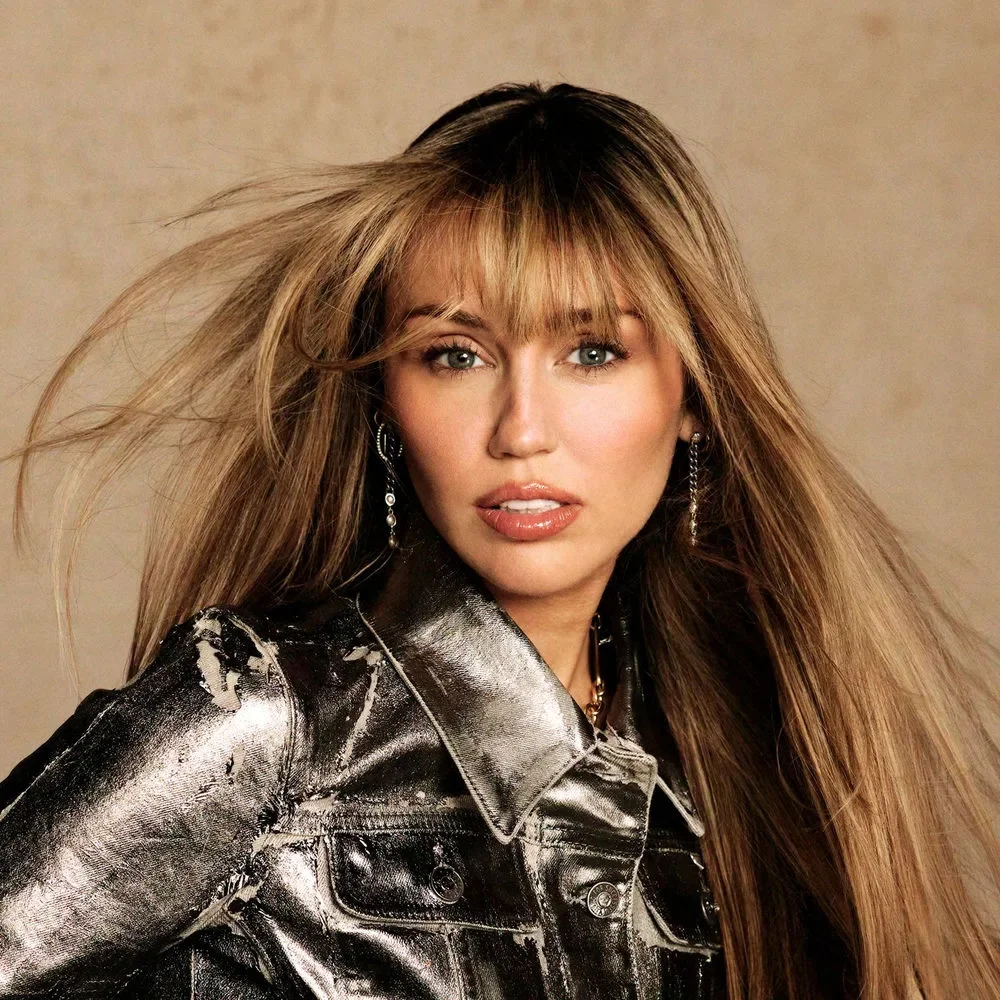
Miley Cyrus is one of the hardest pop artists to trap inside a single version of herself. For some people, she will always be the girl in the blonde wig singing to a generation raised by Disney Channel. For others, she is the star who violently shattered that image during Bangerz. For others still, she is the raspy-voiced rocker of Plastic Hearts, the adult narrator of Flowers, or the artist who chose to turn Something Beautiful into a visual pop opera rather than a traditional tour cycle. Her career has never been a straight line. It has been a series of breakaways: from character, from youth-industry machinery, from family expectation, from public image, from genre and, often, from her own previous self.
Born in Franklin, Tennessee, as Destiny Hope Cyrus, Miley grew up in a family where music was not a distant fantasy. Her father, Billy Ray Cyrus, was already part of the American country imagination, and that Southern environment — guitars, stages, family fame and popular American storytelling — left a root that never fully disappeared. Even when Miley moved into glossy pop, hip-hop-inflected production, rock or visual art-pop, there has always been something in her voice that remembers Tennessee: a natural grit, a dusty edge, a way of singing that does not sound manufactured even inside massive production.
The world first knew her as Hannah Montana, and that beginning cannot be treated as a footnote. The show was not merely a successful children’s program; it was a complete cultural machine: television, albums, concerts, merchandise, adolescent fantasy and a model of pop stardom staged inside fiction that eventually spilled into real life. Miley Stewart was an ordinary girl who became an idol by putting on a wig. The irony is that Miley Cyrus lived something similar outside the screen: she became famous before she had finished building an adult identity. For millions of listeners, her voice is tied to backpacks, posters, Disney songs, family concerts and a more innocent idea of fame.
But Miley never seemed willing to remain still inside that image. Breakout and songs like “7 Things” showed a teenager trying to step away from the character without destroying the bridge completely. “The Climb” became a generational ballad, a self-growth anthem that could sound like the end of a movie and a symbolic farewell to childhood at the same time. Then Can’t Be Tamed delivered the first sharper warning: cage, wings, sensuality, rebellion, a need to be seen as grown even while the public still read her as a Disney child. It was not a smooth transition, but real transitions rarely are.
The rupture came with Bangerz. That era was chaotic, controversial, bright, uncomfortable and, above all, effective in demolishing the old image. “We Can’t Stop” introduced a strange, narcotic, messy party, with slower, more urban, more provocative pop. “Wrecking Ball” revealed the opposite extreme: a huge, vulnerable ballad turned viral image and emotional blow. Bangerz was not only an album of hits; it was a public act of separation. Miley seemed to be saying that she would rather be misunderstood than remain domesticated. The conversation around her body, gestures and visual choices became intense, but beneath the noise there was something important: an artist trying to regain control over an image the industry had built around her as a child.
After that explosion, her career became more uneven and more interesting. Miley Cyrus & Her Dead Petz was strange, psychedelic, excessive, almost anti-commercial, showing her desire to escape even the new formula she had just created. Younger Now tried to return to a softer country-pop space, more reconciled with her origins, with “Malibu” as a bright, clean, open-air song. In those shifts, one of Miley’s central traits becomes clear: she does not always choose the most profitable route. She often chooses the one that makes her feel less trapped.
Plastic Hearts became one of her strongest eras because it connected her voice with a territory that felt natural: rock. “Midnight Sky,” “Prisoner” with Dua Lipa and “Angels Like You” showed a more assured Miley, less interested in shock and more interested in inhabiting a tradition of guitars, ’80s synths, worn glamour and long nights. There, her voice found an obvious home. The rasp that could sometimes feel disruptive inside teen pop became an asset: a voice with scars, smoke, theater and force.
Endless Summer Vacation opened another door. “Flowers” became enormous because it arrived with near-perfect emotional clarity: autonomy, heartbreak, self-care, a simple phrase, a clean melody and a public narrative the world understood immediately. It did not need to overexplain itself. The song worked because it captured something Miley had been searching for across years: an adult form of independence. She was no longer the child escaping Disney, nor the young woman provoking the world to break the cage. She sounded like someone singing from a hard calm, from the idea that survival can also sound light.
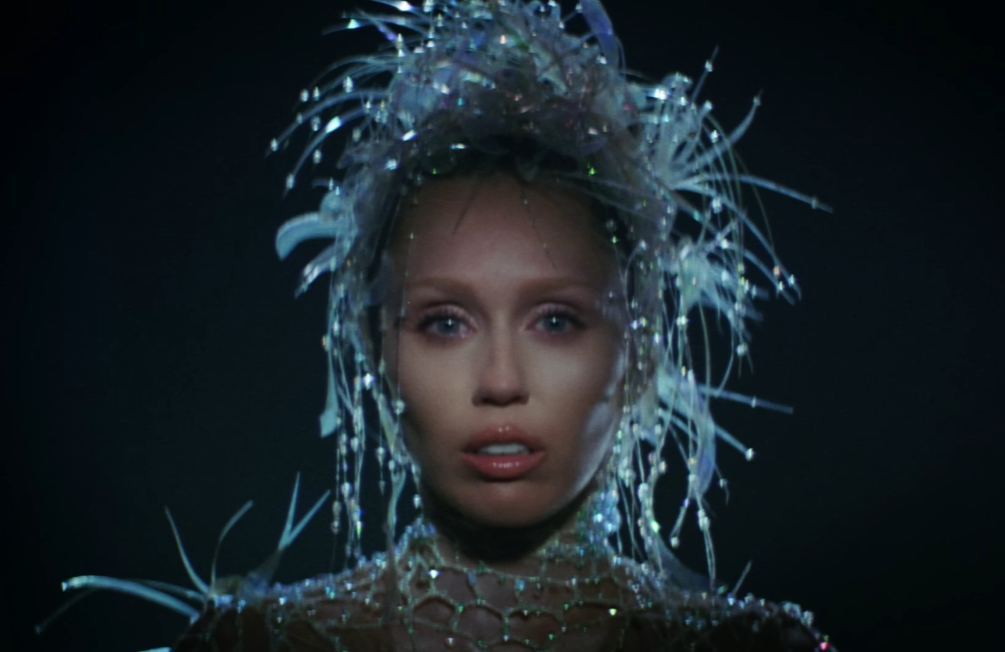
Something Beautiful deepened that maturity from another direction. Instead of designing a standard radio-and-tour comeback, Miley presented a visual album shaped by aesthetic ambition, archival fashion, fantasy, darkness, desire and authorship. Songs like “End of the World,” “More to Lose” and “Something Beautiful” show an artist who no longer needs to prove she can transform; now she seems more interested in building complete atmospheres. Her decision not to tour the project also says a great deal about her current phase. Miley appears more aware of the cost of exposure, the exhaustion of the road and the need to protect stability rather than feed the machine without pause.
Miley Cyrus matters because her career tells a very contemporary story: the story of a person turned into a cultural product before she was old enough to decide what that meant, who then spent years dismantling, rebuilding and twisting that image. She has been a child star, a teen idol, a pop provocateur, a rock singer, a vulnerable songwriter, a queer-friendly figure, a country heir and a visual artist. Her strength is not perfect consistency. It is endurance. Miley changes because staying the same never seemed like a real option. And in that discomfort, in that broken-edged voice still searching for new forms, much of her artistic truth lives.
Main genre
POP
Main subgenres
Like a superfan's list — except verified, with sources and links.

May 27 – Jun 02, 2019
Barcelona, Catalunya · Spain
PastWhat we managed to link to the concert archive. If a date is missing, tell us — happens to us too.
No linked concerts
Every concert and festival of the year, traced on the globe. Hit play and follow the route stop by stop.
Photos from the public archive.
Recent coverage linked to the artist.



Close by genre and social signal.
No related artists
When there is enough genre signal, they will appear here.