














Ranking
#32

Ranking
#32
Followers
171.6 M
Digital presence
Official profiles, streaming and discovery.
What a good fan recites by heart (or pretends to).
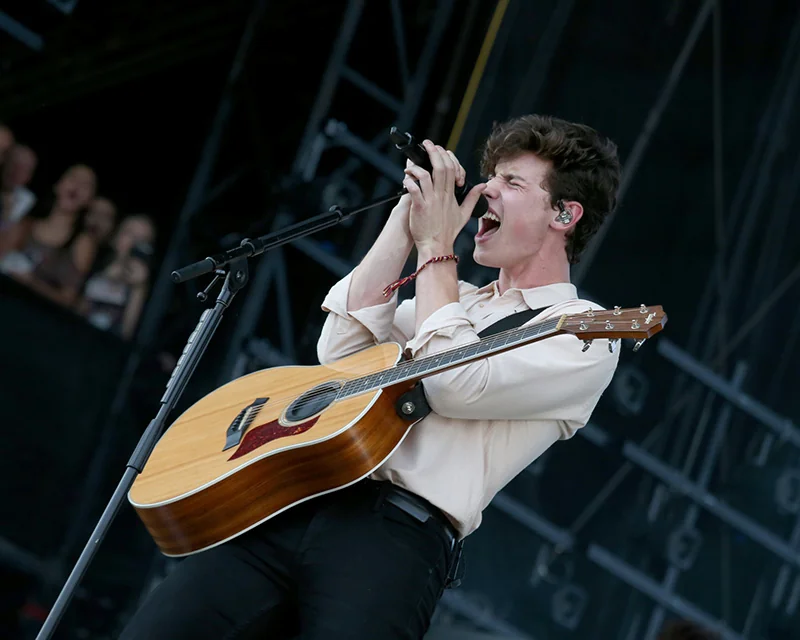
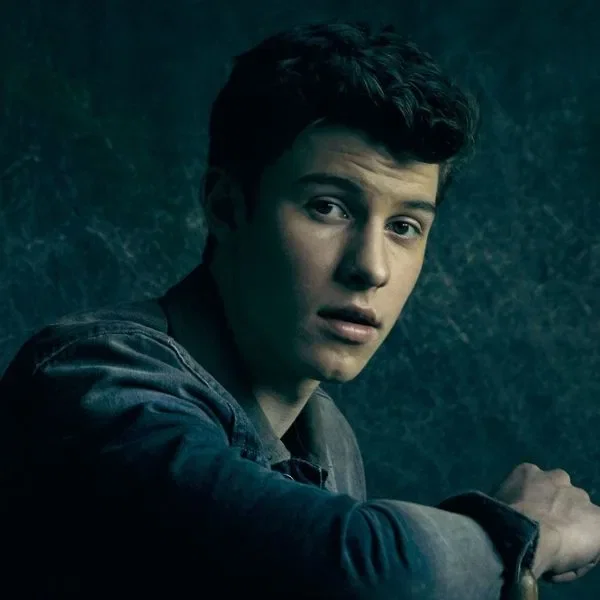
Shawn Mendes is one of those figures who arrived in pop at the exact moment when the internet began changing how stars were made. He did not first appear as a mysterious studio voice or as an artist assembled by a traditional television machine, but as a boy with a guitar, a phone, short covers and a presence that felt close before it became huge. His Vine origin mattered because it shaped part of his relationship with the public: Shawn did not enter through distance, but through proximity. People watched him grow, make mistakes, sharpen his voice, become famous, get tired and search for himself almost in real time.
Born in Toronto and raised in Pickering, Shawn Mendes built his first musical identity from a very direct sensitivity: acoustic guitar, clean voice, teenage romanticism and a mix of shyness and ambition that quickly connected with a generation used to discovering artists through a phone. “Life of the Party” was the first major step outside the world of covers. It was not yet the most fully defined Shawn, but it already showed something essential: an emotional voice, a simple aesthetic and an ability to sound vulnerable without losing pop clarity. At fifteen or sixteen, that was enough to turn him into a promise.
Handwritten moved him into the major league. “Stitches” was the strike that turned him into an international figure: a song about romantic pain with immediate pulse, strong chorus and a performance that turned hurt into melody. Shawn had something teen pop understands very well: he could sing as if every emotion were new. That freshness made songs like “Something Big,” “Never Be Alone” and “Life of the Party” feel like early photographs of a career still being built. He was not the most risky artist of his generation, but he was one of the most effective at turning teenage anxiety into clear songcraft.
Illuminate began to reveal a more confident version. “Treat You Better” had a sharper, more radio-ready pop structure, more aware of its own impact. “Mercy” exploited his dramatic side, with vocal tension that expanded the image of the guitar boy into something more intense. “There’s Nothing Holdin’ Me Back” opened a more rhythmic, physical zone built for larger stages. In that period, Shawn Mendes stopped being only an internet promise and became a touring, radio and global-audience artist. His language remained accessible, but his scale had changed.
The 2018 album Shawn Mendes was a key stage because it tried to make him grow without breaking the bond with his base. “In My Blood” was probably his most important song in terms of emotional maturity. It did not speak only about love or desire; it spoke about anxiety, endurance, exhaustion, fear and the need to keep going. Its central phrase had the force of a personal statement, but also of a generational message: I am not going to give up. “Lost in Japan” showed a lighter, more sensual side. “Youth,” with Khalid, connected to a broader social concern. “If I Can’t Have You” and “Señorita” placed him more firmly inside adult, elegant and international pop.
Wonder arrived with a more expansive ambition. There was a desire to sound bigger, more cinematic and more emotionally open. “Wonder,” “Monster” with Justin Bieber and “Teach Me How to Love” showed an artist trying to escape the mold of the romantic boy and speak also about pressure, fame, identity and desire. But that stage also coincided with deep exhaustion. The cancellation of the Wonder tour became a public breaking point: Shawn had to stop a huge machine in order to take care of his mental health. In an industry that often demands constant motion, that pause became an important part of his story.
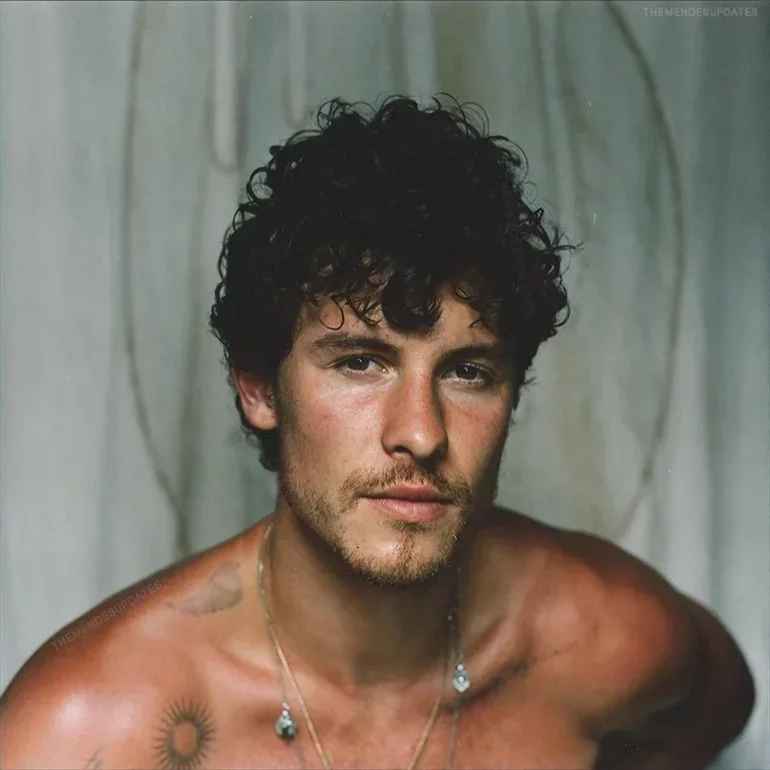
What is interesting is that his return did not try to pretend nothing had happened. Shawn, his 2024 album, sounds like an artist who decided to lower the volume of the machine in order to hear his own breathing. Less pop gloss, more wood, more guitar, more folk, more doubt. Songs such as “Why Why Why,” “Isn’t That Enough,” “Nobody Knows,” “Heart of Gold” and “The Mountain” do not feel designed to compete commercially with “Stitches” or “Señorita” at the same speed. They seem born from another impulse: to understand who remains after a pause, after exhaustion, after expectation.
That transition matters because Shawn Mendes was always seen as a “correct” star: kind, handsome, talented, clean, radio-friendly, teen-friendly, award-show friendly. But growing inside such an orderly image can also become a cage. His recent era shows him trying to break that surface without destroying it completely. He does not reject the pop that made him famous, but he searches for a more honest way to inhabit it. His voice, once associated with youthful romance, now carries more adult questions: what to do with fame, how to recover the body, how to sing when you no longer want to run, how to sound true after having sounded perfect.
Shawn Mendes matters because he represents a very specific story of digital pop: the star discovered on a screen who had to learn how to be a person outside it. His career brings together the viral phenomenon, acoustic balladry, arena pop, emotional vulnerability and a recent, more introspective search. At his best, Shawn does not need to look invincible. It is enough for him to sing from the place where fragility can still become a chorus.
Main genre
POP
Main subgenres
Like a superfan's list — except verified, with sources and links.

13–Sep 22, 2024
Rio de Janeiro, Rio de Janeiro · Brazil
Past15–Sep 24, 2017
Rio de Janeiro, Rio de Janeiro · Brazil
PastWhat we managed to link to the concert archive. If a date is missing, tell us — happens to us too.
No linked concerts
Every concert and festival of the year, traced on the globe. Hit play and follow the route stop by stop.
Photos from the public archive.
Recent coverage linked to the artist.
Close by genre and social signal.
No related artists
When there is enough genre signal, they will appear here.