Ranking
#48

Ranking
#48
Followers
129.2 M
Digital presence
Official profiles, streaming and discovery.
What a good fan recites by heart (or pretends to).
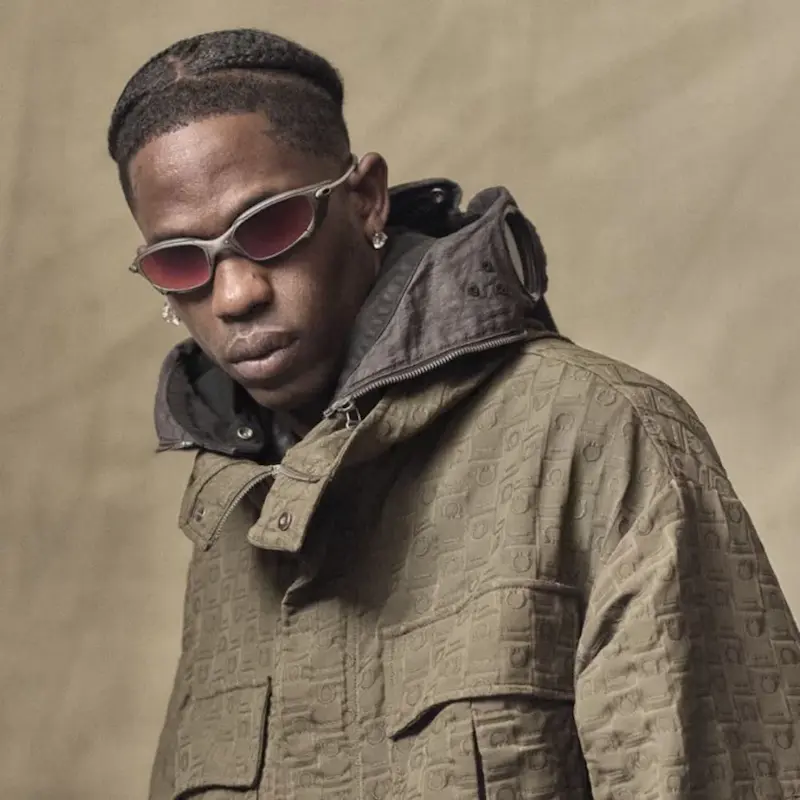
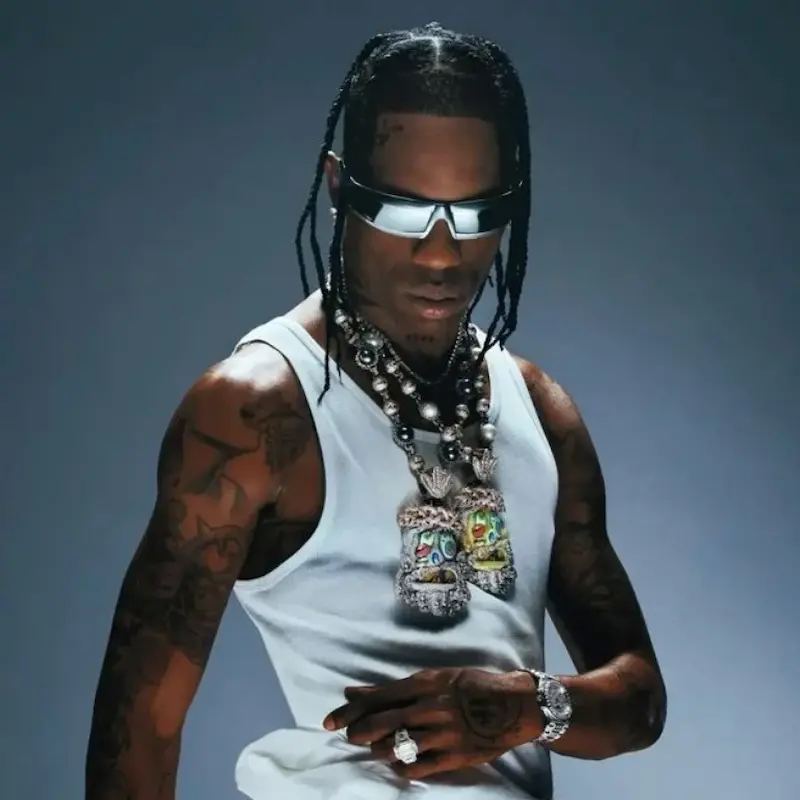
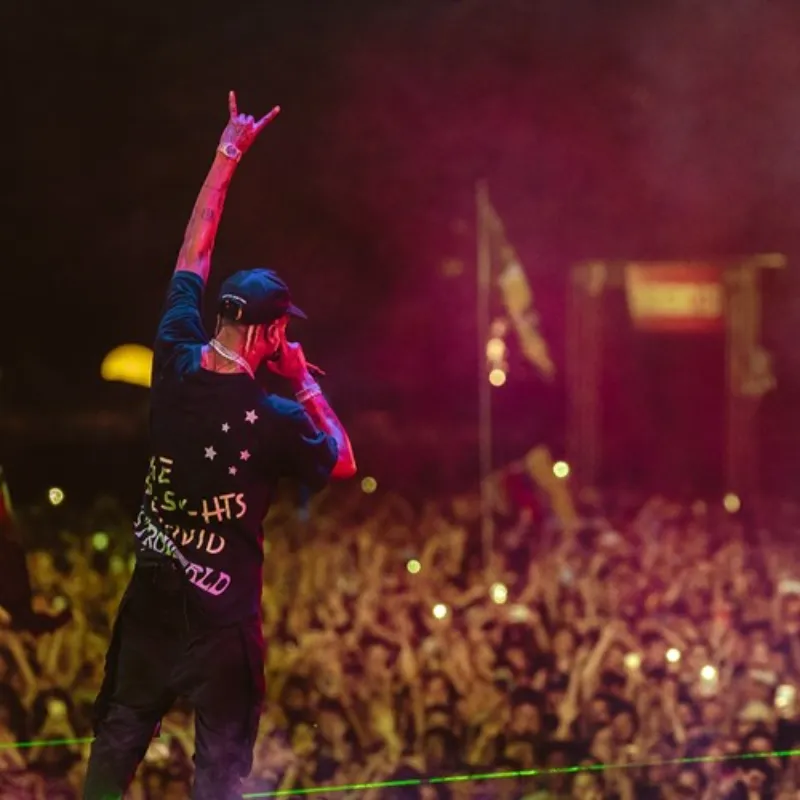
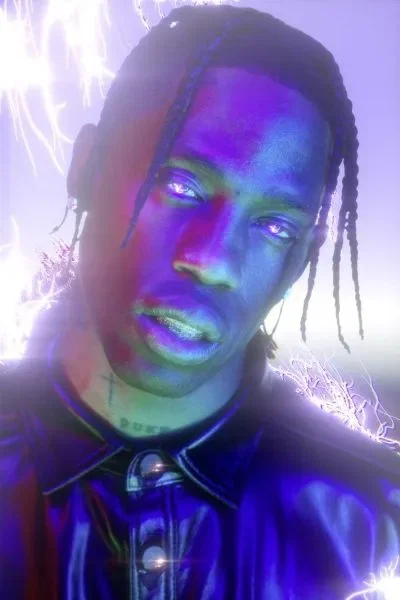
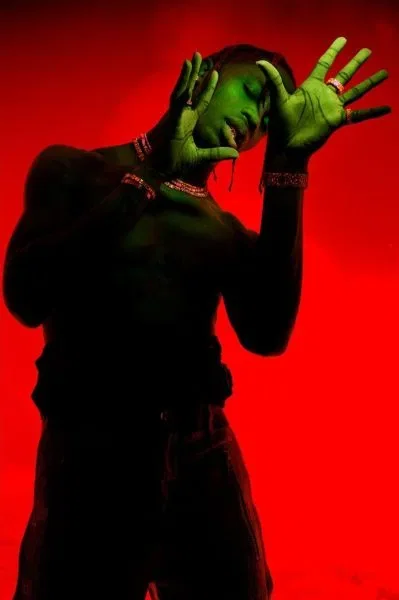
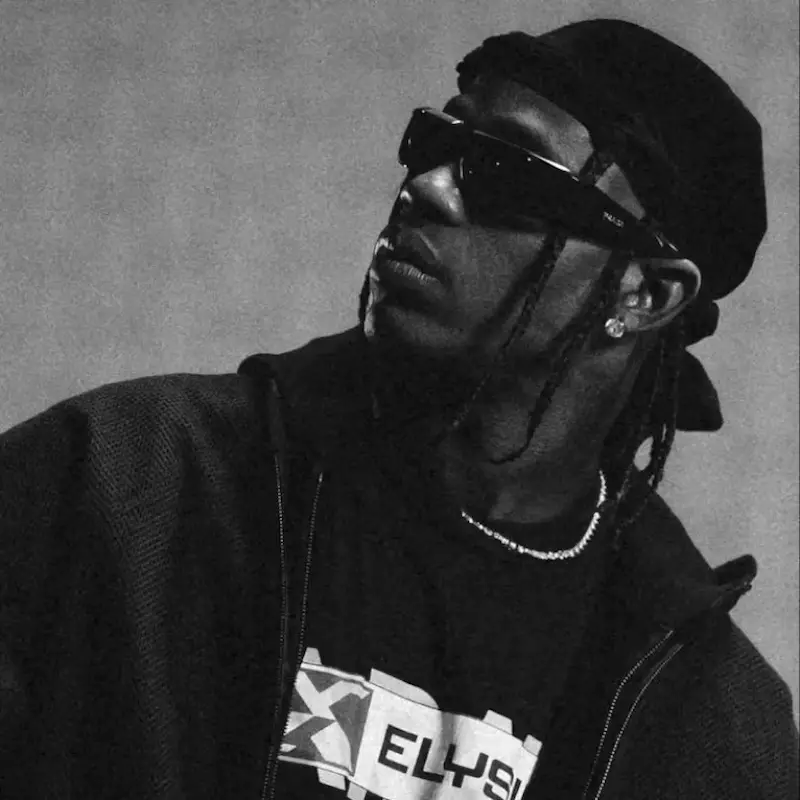
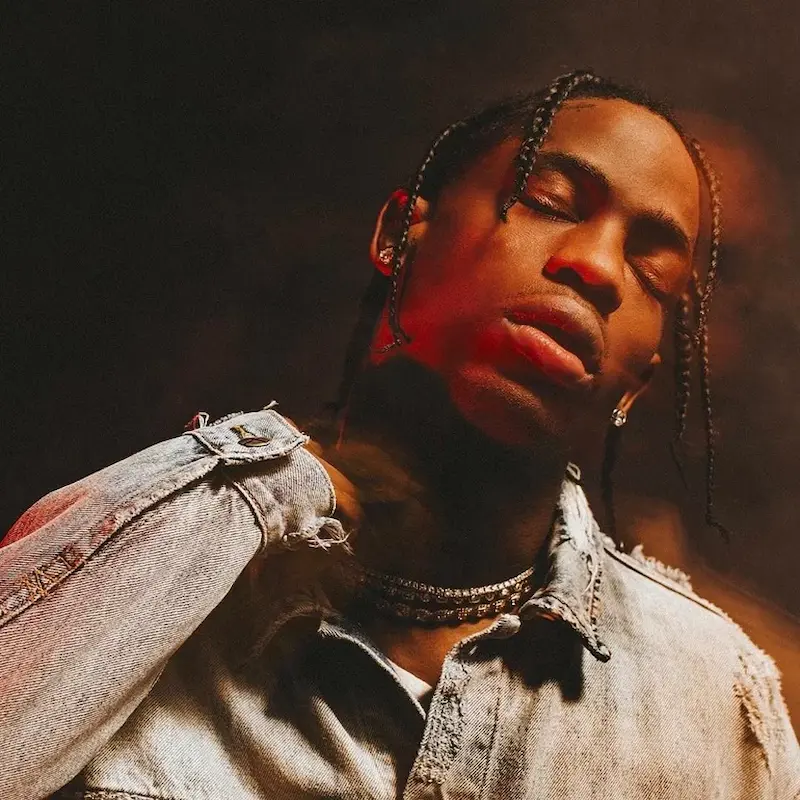
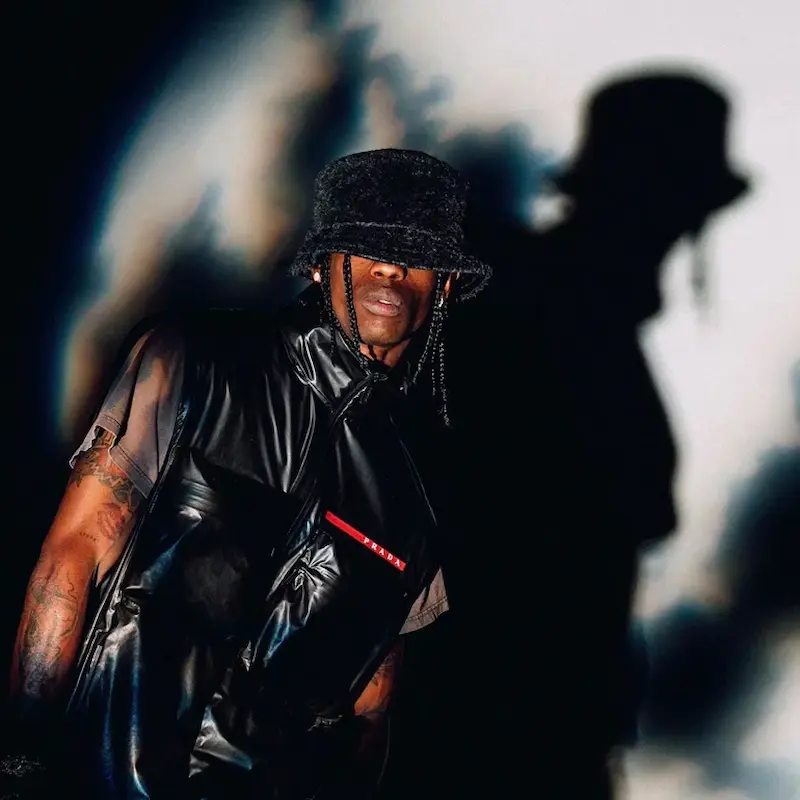
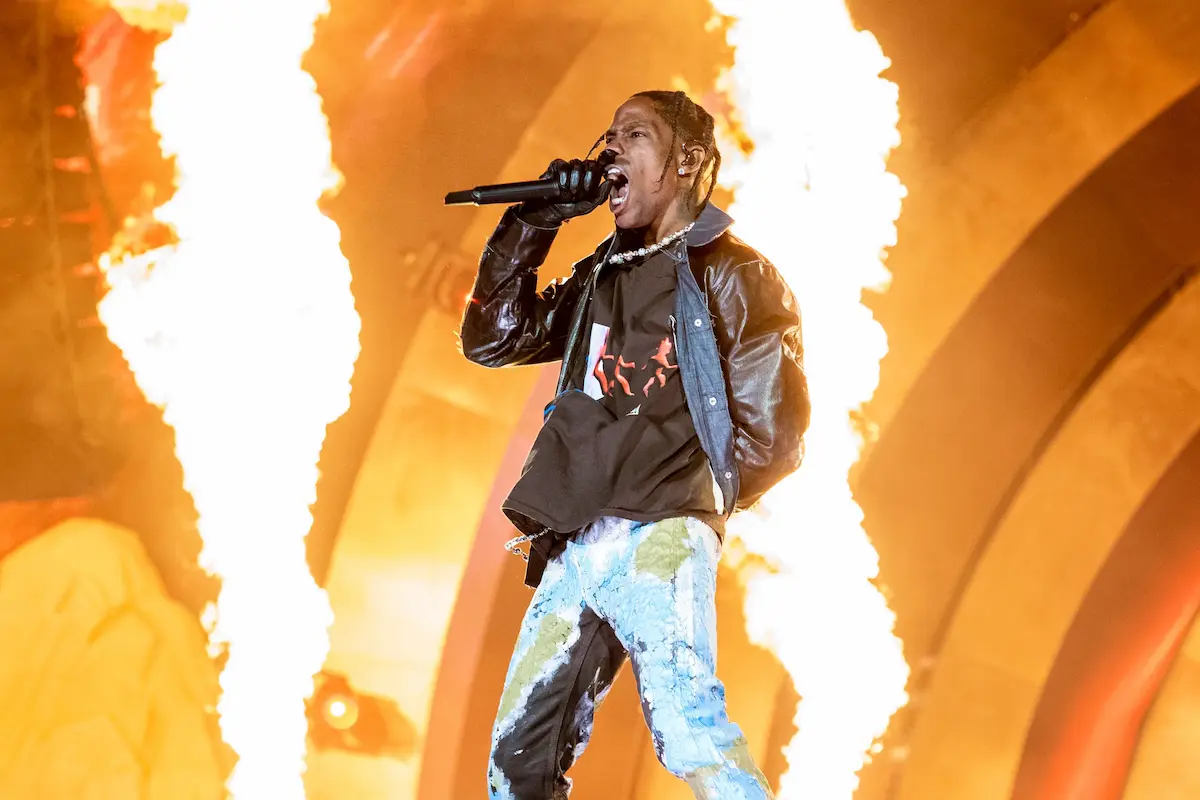
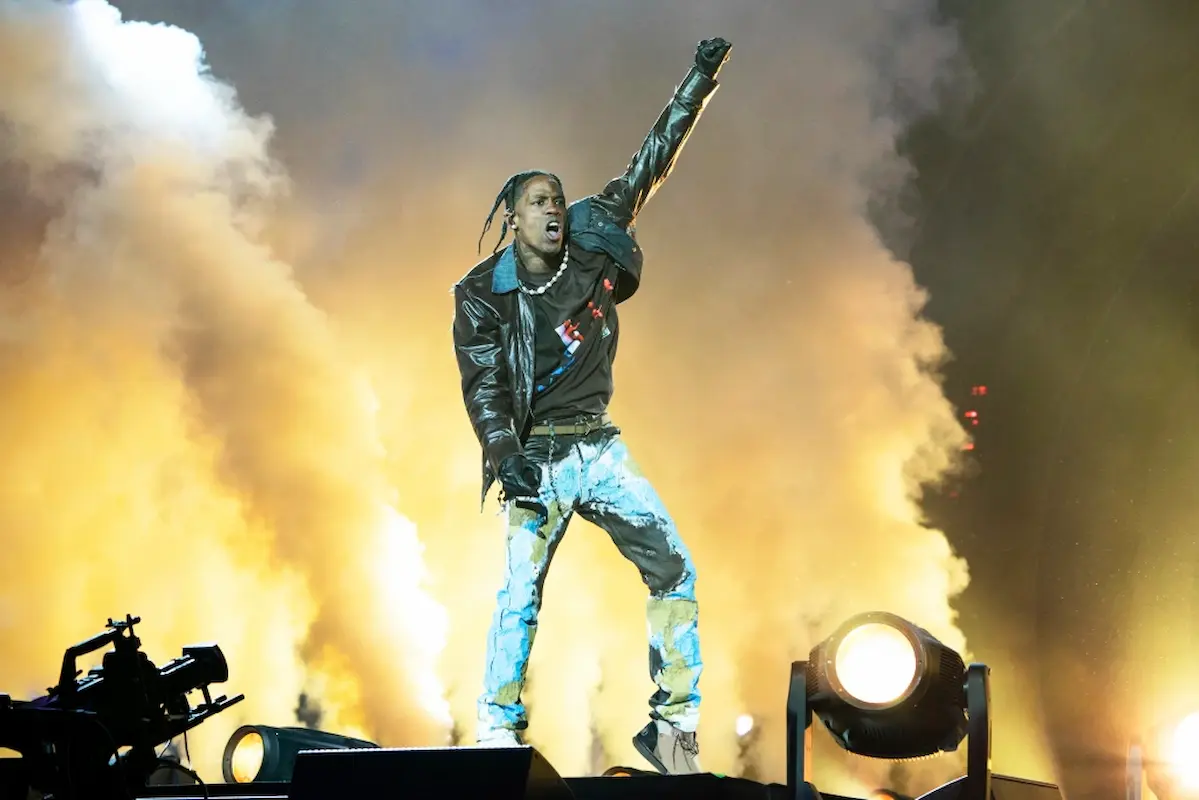
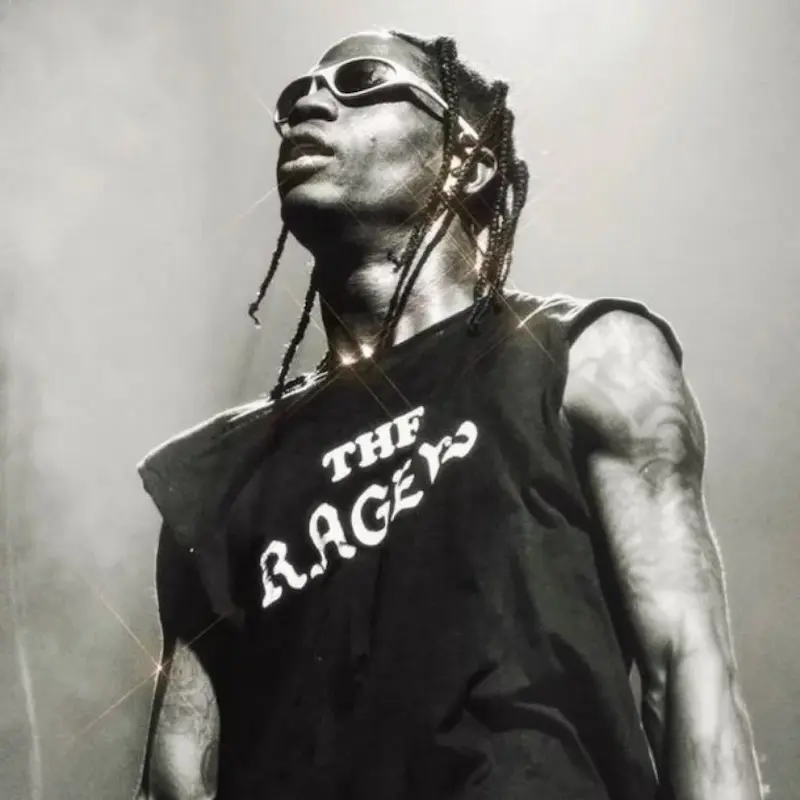
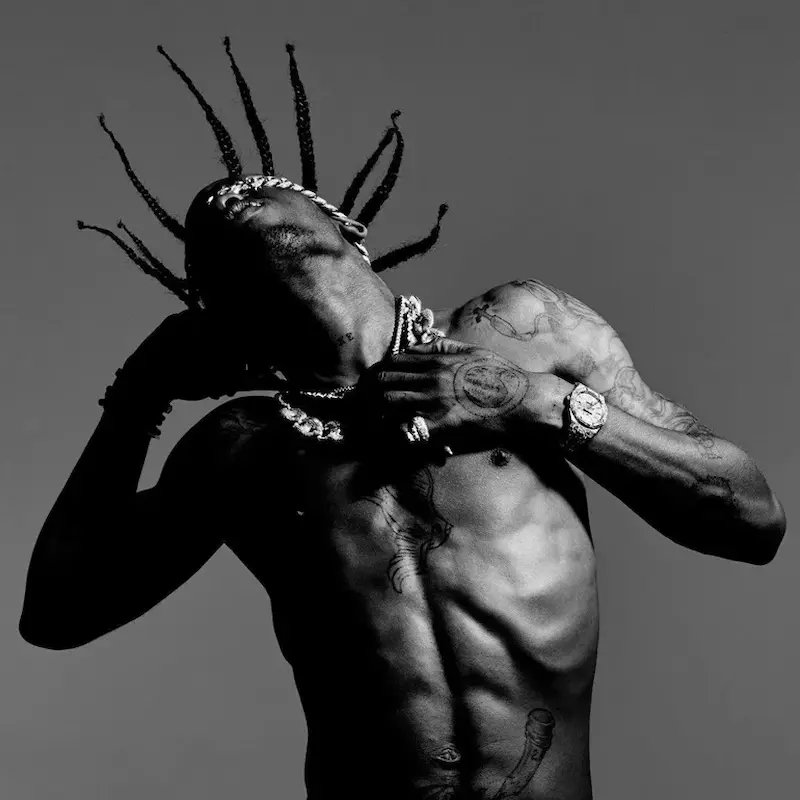
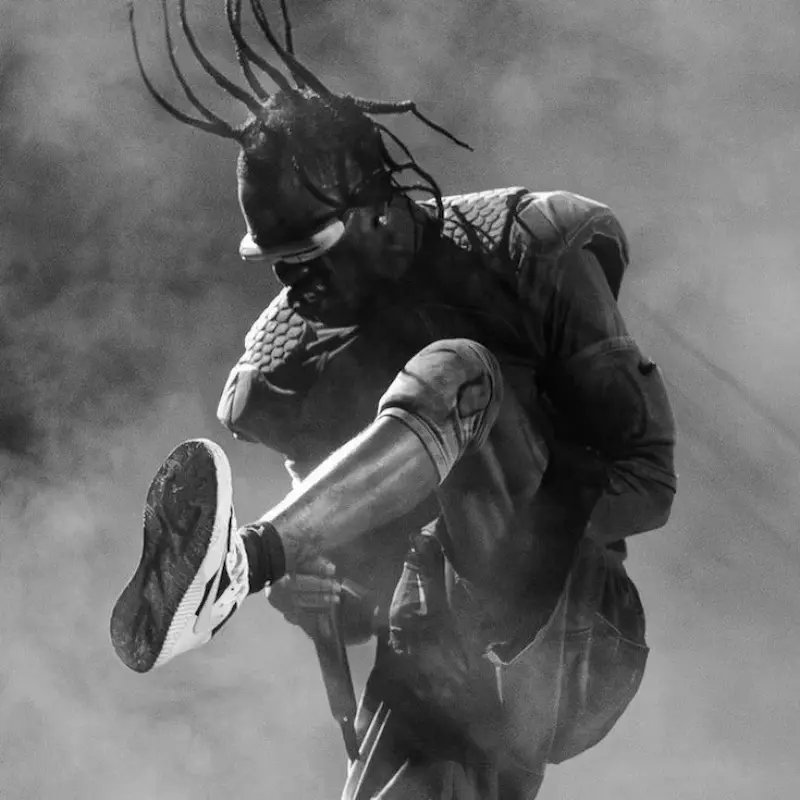
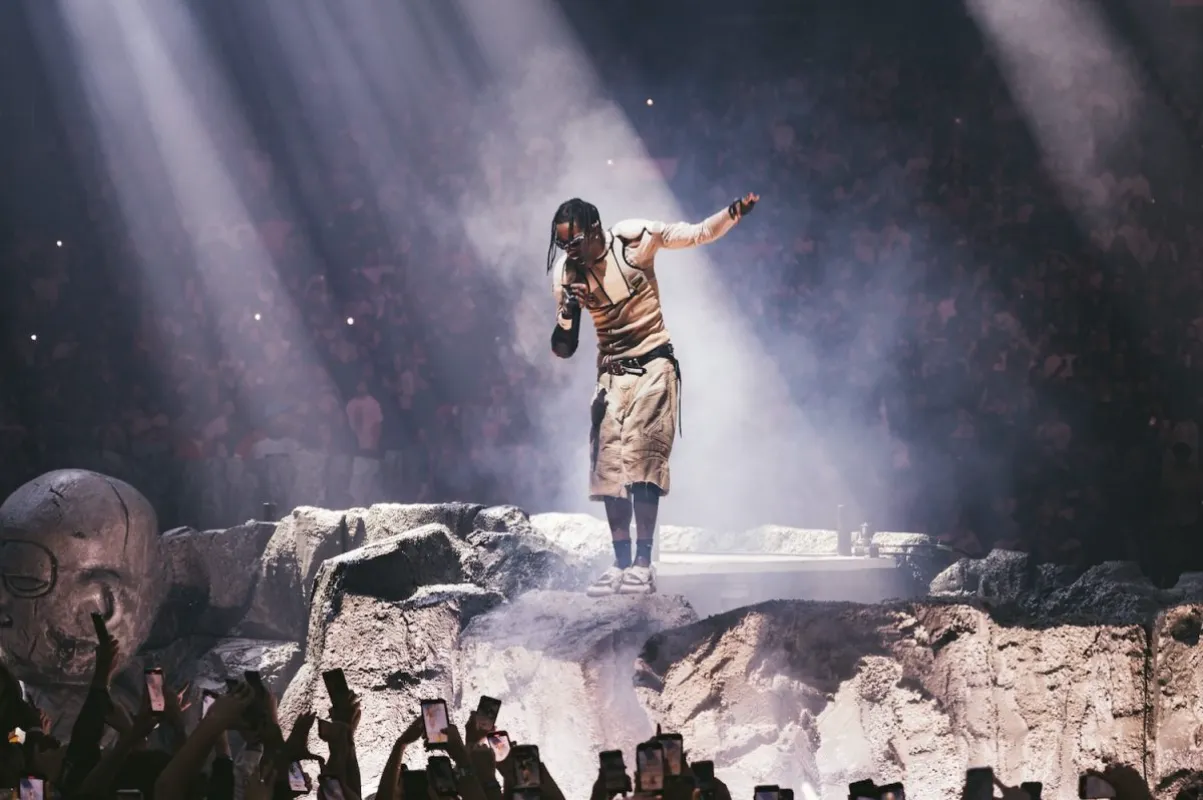
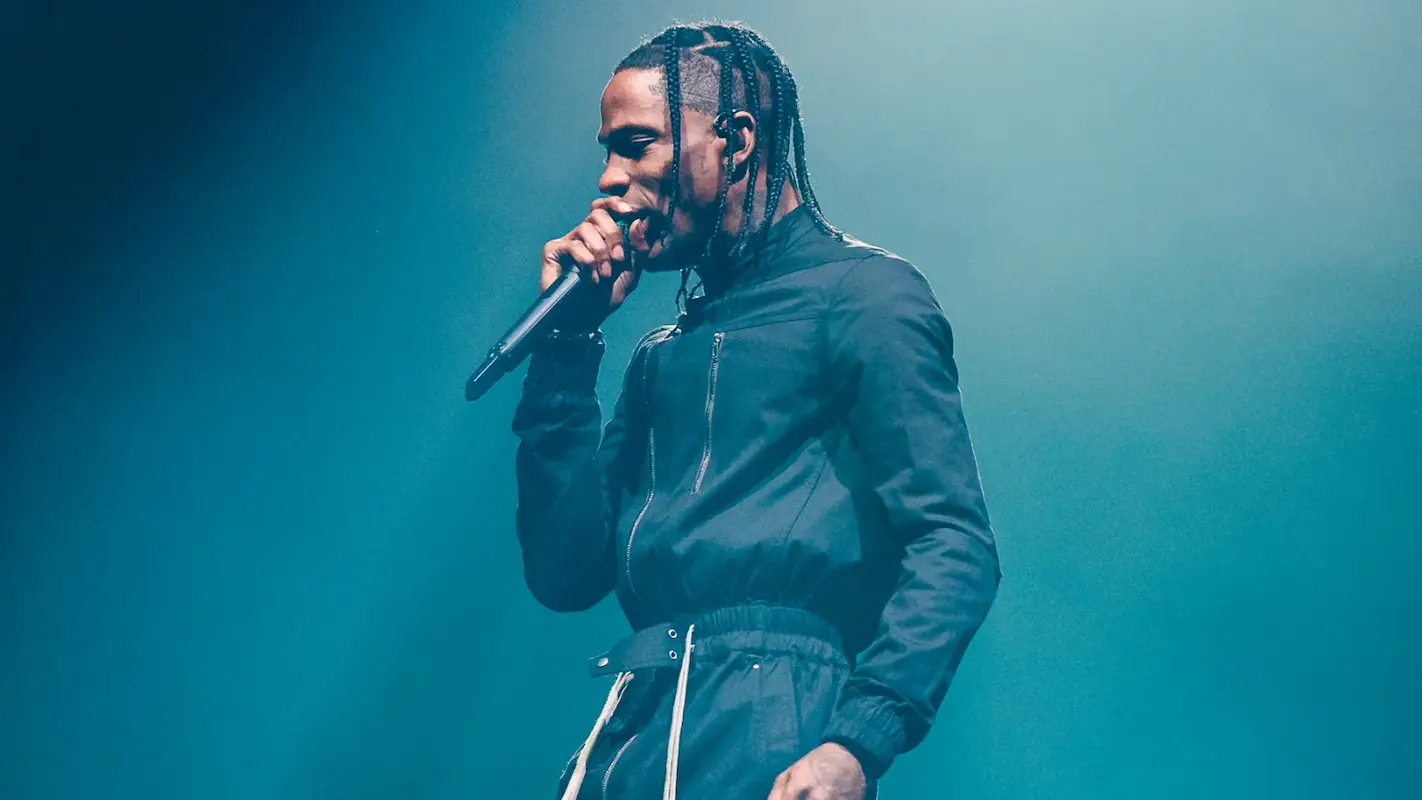
Travis Scott is not only a successful rapper; he is one of the main architects of modern hip-hop atmosphere. His music cannot be understood only through lyrics, flows or hits, but through the world he builds around sound: dark amusement parks, foggy synths, basslines that seem to open the ground, processed voices echoing through tunnels, crowds in a trance and an aesthetic where night, chaos, luxury, psychedelia and festival energy melt into one experience. Travis did not enter rap to occupy the center with clear discourse; he entered to distort the space.
Born in Houston, Texas, and raised between the city and Missouri City, Travis Scott absorbed early a Southern tradition where rap was not only rhythm, but texture. Houston already had a deep inheritance: chopped and screwed, slow bass, cars, smoke, dragged melodies, voices that seemed to melt inside the beat. Travis took part of that memory, but he did not reproduce it like a museum piece. He pushed it somewhere else: more cinematic, more digital, more global, closer to the feeling of walking inside an audiovisual installation than listening to a rapper over a conventional track.
Before stardom, there was Jacques Webster trying to find an exit. Production, early duos, moves, hunger, producer connections and an obsession with turning scattered ideas into identity. His arrival around Kanye West and G.O.O.D. Music mattered because it connected him with a school where rap could be architecture, fashion, design, performance and total ambition. Owl Pharaoh, his first major project as Travis Scott, already showed that atmospheric will: dark beats, dense layers, Auto-Tune, trap, theatricality and the sense of hearing someone more interested in creating a climate than telling a linear story.
Days Before Rodeo was the real warning shot. There, the Travis who would dominate the decade appeared more clearly: dark, explosive, catchy, narcotic, halfway between rapper, producer and experience director. “Mamacita,” “Don’t Play,” “Skyfall” and “Drugs You Should Try It” expanded his universe. He was not yet the most massive artist, but he already had something few artists achieve: an immediately recognizable vibe. Travis understood that in an era of overabundance, sonic identity could be more important than traditional technique. His sound did not ask for attention; it absorbed you.
Rodeo consolidated that vision. More than a debut, it felt like an origin film. “3500,” “Antidote,” “90210,” “Nightcrawler” and “Maria I’m Drunk” showed different faces of the same obsession: excess, loneliness, desire, fame, drugs, aspiration and emptiness. “Antidote” was the commercial blow, but “90210” revealed the heart of the project: a song split in two, with surface gloss and inner confession, where the fantasy of fame met the anxiety of not knowing what remains when everything is achieved. Rodeo did not only introduce Travis as a rapper; it introduced him as a world-builder.
Birds in the Trap Sing McKnight pushed that aesthetic into a more compact, nocturnal, dark-luxury format. “goosebumps,” with Kendrick Lamar, became one of his definitive songs because it condenses his formula: hypnotic repetition, minimal melody, desire, tension and a beat that seems to move through purple smoke. “pick up the phone,” “beibs in the trap,” “through the late night” and “way back” reinforced his role as a curator of environments. Travis rarely sounds alone on his records; his albums are systems of guests, producers, textures and light changes. His gift is making everyone enter his planet.
ASTROWORLD was the consecration. The album took the name of a Houston amusement park and turned it into a huge metaphor: lost childhood, city, fantasy, chaos, adrenaline and memory. “SICKO MODE” broke traditional structure with several beat switches and became a global anthem. “STARGAZING,” “STOP TRYING TO BE GOD,” “YOSEMITE,” “CAN’T SAY,” “BUTTERFLY EFFECT” and “NO BYSTANDERS” built a universe where rap could sound like a roller coaster. ASTROWORLD mattered because it elevated his aesthetic to full scale: not only music, but brand, tour, merchandise, festival, imagery and community.
That scale also brings a complicated part of his story. The Astroworld Festival tragedy in 2021, where a crowd crush left people dead and hundreds injured, profoundly changed the conversation around Travis Scott. His image of concerts as overflowing energy, once read as intensity and communion, became tied to questions about safety, responsibility, mass culture and the limits of spectacle. It is impossible to speak about his legacy without recognizing that breaking point. The darkness of his aesthetic stopped being only visual or sonic; it also became part of the real debate over what happens when collective euphoria loses control.
UTOPIA arrived afterward as return, recalibration and reaffirmation. The album did not try to soften him completely; rather, it deepened his ambition as a total producer. With collaborators such as Beyoncé, Drake, The Weeknd, James Blake, Future and Playboi Carti, the project sounded huge, fragmented, industrial, luxurious and sometimes unsettling. “FE!N,” “MELTDOWN,” “MY EYES,” “I KNOW?,” “TELEKINESIS” and “HYAENA” showed that Travis still thinks of the album as an experience of sonic architecture. He does not always seek direct intimacy; often he seeks immersion. His music does not tell you where he is; it puts you there.
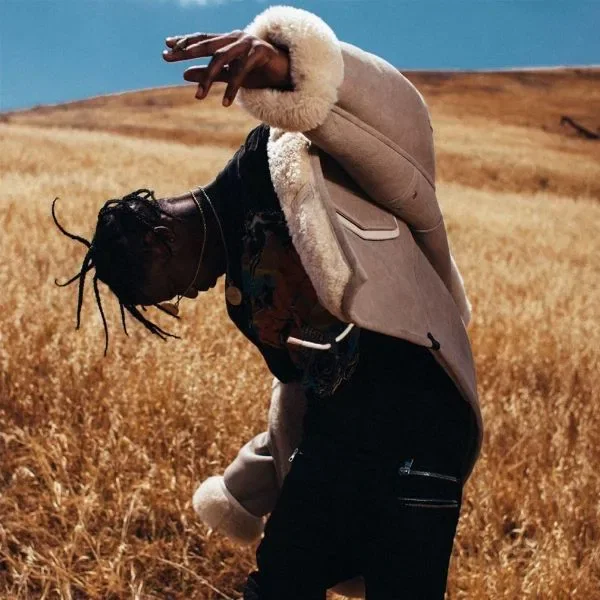
The Cactus Jack era, JACKBOYS and his collaborations broaden his influence even more. Don Toliver, Sheck Wes, SoFaygo, fashion, Nike, Dior, McDonald’s, Fortnite, WWE, festivals, visuals and products turn Travis into something beyond a musical artist: a cultural platform. That expansion can generate fascination and exhaustion at the same time, but it confirms his ability to understand how contemporary youth culture works: not as a single industry, but as an ecosystem where music, fashion, gaming, design, collecting and spectacle feed one another.
Travis Scott matters because he changed the sound, scale and experience of festival rap. He is not the most transparent lyricist or the most classic storyteller, but he is one of the great sensory designers of his generation. His legacy lives in distorted bass, atmospheric Auto-Tune, shows as rituals, albums as worlds and an idea of rap where vibe can be architecture. At his best, Travis does not sound like someone performing songs; he sounds like someone lighting up a night city and letting the crowd run in.
Main genre
HIP HOP
Main subgenres
Like a superfan's list — except verified, with sources and links.

18–Apr 20, 2025
Indio, California · United States
Past11–Apr 13, 2025
Indio, California · United States
Past
13–Sep 22, 2024
Rio de Janeiro, Rio de Janeiro · Brazil
Past
07–Jul 09, 2023
München, Bayern · Germany
Past
07–Jul 09, 2023
London · United Kingdom
Past
06–Jul 09, 2023
Liège, Liège · Belgium
Past06–Jul 08, 2023
Frauenfeld · Switzerland
Past
05–Jul 08, 2023
Portimão, Algarve · Portugal
Past01–Jul 02, 2023
Dublin · Ireland
Past
Jun 30 – Jul 01, 2023
Rotterdam, South Holland · Netherlands
PastWhat we managed to link to the concert archive. If a date is missing, tell us — happens to us too.
No linked concerts
Every concert and festival of the year, traced on the globe. Hit play and follow the route stop by stop.
Photos from the public archive.
Recent coverage linked to the artist.




Close by genre and social signal.
No related artists
When there is enough genre signal, they will appear here.