Ranking
#1,255

Ranking
#1,255
When
22–JUL 24, 2027
Featured artists
Lineup coming — we'll publish it as soon as it's confirmed.
Time left
16 editions to explore · future, live and past
Numbers, home base and house quirks
For one summer weekend each year, the football stadium beside the Ohio River becomes part of a much older Cincinnati ritual. Families arrive in coordinated outfits, groups travel in from cities across the Midwest and South, and longtime attendees still casually call the event “Jazz Fest” even when the evening is dominated by R&B singers or hip-hop pioneers. That surviving nickname says more about Cincinnati Music Festival than any current logo. Few major American music events have changed sponsors, names, venues and musical emphasis so many times while continuing to feel like the same gathering passed from one generation to the next.
Its official Cincinnati history begins in 1962, when promoter Dino Santangelo and jazz impresario George Wein launched the Ohio Valley Jazz Festival at the Carthage Fairgrounds. Wein already understood how to turn jazz into a large public festival experience, while Santangelo had worked with regional events in Indiana. Their first Cincinnati bill was extraordinary: Louis Armstrong, Duke Ellington, Dave Brubeck, Sonny Rollins, Gerry Mulligan, Coleman Hawkins, Horace Silver, Jimmy Smith and other major figures appeared in the same inaugural year. At that point there was no need to explain the festival through soul, R&B or hip hop. It was a serious jazz gathering built at the scale of a civic summer event.
The venue grew with the audience. Crosley Field became an important early home, and in 1971 the festival moved to Riverfront Stadium, establishing a relationship between downtown Cincinnati, the river and stadium-scale Black music that remains central today. The sound was changing at the same time. Jazz remained important, but soul, funk and R&B increasingly reflected what the audience wanted to hear and what Black popular music itself was becoming. Sponsorship created a succession of names — Ohio Valley Jazz Festival, Kool Jazz Festival, Kool Jazz Fest, Nissan Festival, Jazz Festival and Coors Light Riverfront Stadium Festival — yet the public often treated them as versions of one institution rather than separate events.
That flexibility became a survival skill. Aretha Franklin, Marvin Gaye, Stevie Wonder, Patti LaBelle and Earth, Wind & Fire belong to one era of Black American music; Whitney Houston, Luther Vandross and New Edition to another; Mary J. Blige, Usher, Janet Jackson and later hip-hop artists extended the timeline further. Cincinnati’s festival learned not to freeze itself around the genre that had created it. Jazz became the historical foundation, R&B and soul moved to the centre, and rap entered the programme as audiences changed. The result is less a specialist festival than a living survey of music that has travelled through Black radio, family record collections, clubs and arenas for more than half a century.
The most serious break came after 2001. Cincinnati was dealing with the aftermath of the police shooting of Timothy Thomas, civil unrest and a boycott of city businesses and events, while the national economy weakened after September 11. The festival did not take place in Cincinnati from 2002 through 2004. Related programming appeared in Detroit during part of that period, but the traditional Cincinnati weekend was absent. Its return in 2005 therefore mattered far beyond a normal annual relaunch. Macy’s became title sponsor, the Cincinnati Bengals helped provide a new stadium partnership and the festival entered the then-Paul Brown Stadium, now Paycor Stadium. Macy’s Music Festival would remain the public name for ten years.
In 2015, Procter & Gamble became presenting sponsor and the event finally adopted the straightforward Cincinnati Music Festival name. By then the weekend had become much bigger than the stadium concerts alone. Festival513 brought vendors and food to The Banks, downtown hotels filled with repeat visitors, parties spread across the city and the Cincinnati Black Music Walk of Fame added another public celebration of the region’s musical history. The festival’s economic impact is now measured on a citywide scale, but the more revealing change is social: CMF weekend has become a reunion, travel tradition and cultural calendar date for people who may have attended under several different names.
That sense of continuity was tested again when Covid eliminated the 2020 and 2021 editions. The 2022 return, led by Janet Jackson and Charlie Wilson, felt less like the launch of a new product than the resumption of an interrupted tradition. Cincinnati Music Festival depends heavily on that repeat relationship with its audience. People return with friends or relatives, often building the trip around restaurants, shopping, parties and daytime events as much as the concert itself. The music provides the shared language, but the weekend works because attendees recognise one another as part of something larger than a single ticketed performance.
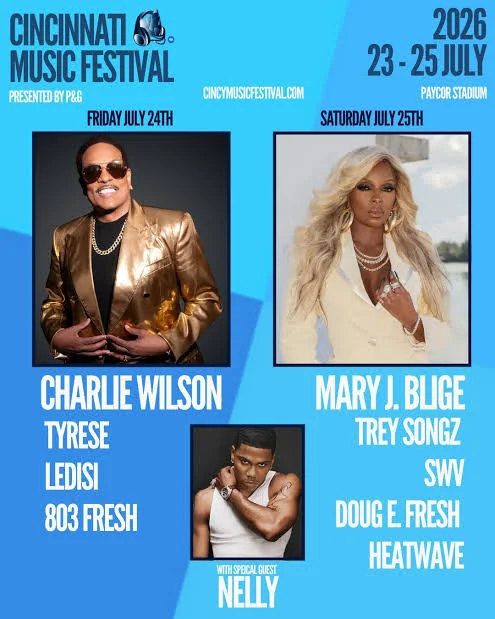
The 2026 edition showed how comfortably the festival can now connect very different decades. Thursday celebrated hip hop with Talib Kweli, DJ Spinderella, Hi-Tek and DJ Vader. Friday moved through 803 Fresh, Ledisi, Tyrese and Nelly before Charlie Wilson closed the night. Saturday brought Heatwave, Doug E. Fresh and Slick Rick, SWV, Trey Songz and Mary J. Blige together in the same stadium. Funk and soul from the 1970s, foundational hip hop, 1990s R&B and more contemporary voices were not competing for identity. They were chapters in the same listening history, presented to an audience accustomed to hearing generations side by side.
The festival is already scheduled to return July 22–24, 2027 at Paycor Stadium, with the lineup still to be announced. More than sixty years after Armstrong and Ellington played the first Cincinnati edition, jazz no longer describes the full programme, but the old “Jazz Fest” nickname still survives because memory is one of the festival’s strongest infrastructures. Cincinnati Music Festival has endured not by remaining unchanged, but by understanding which parts could change without breaking the connection. Sponsors can rotate, stadiums can be demolished and genres can rise or fade. What remains is the expectation that, sometime in late July, Cincinnati’s riverfront will again become a meeting place for several generations of Black music and the people who grew up with it.
Timeline
One artist per year — highest ranked in our archive
Those who appear most across this franchise's editions.
 #1
#1United States
9 editions · 2010–2026
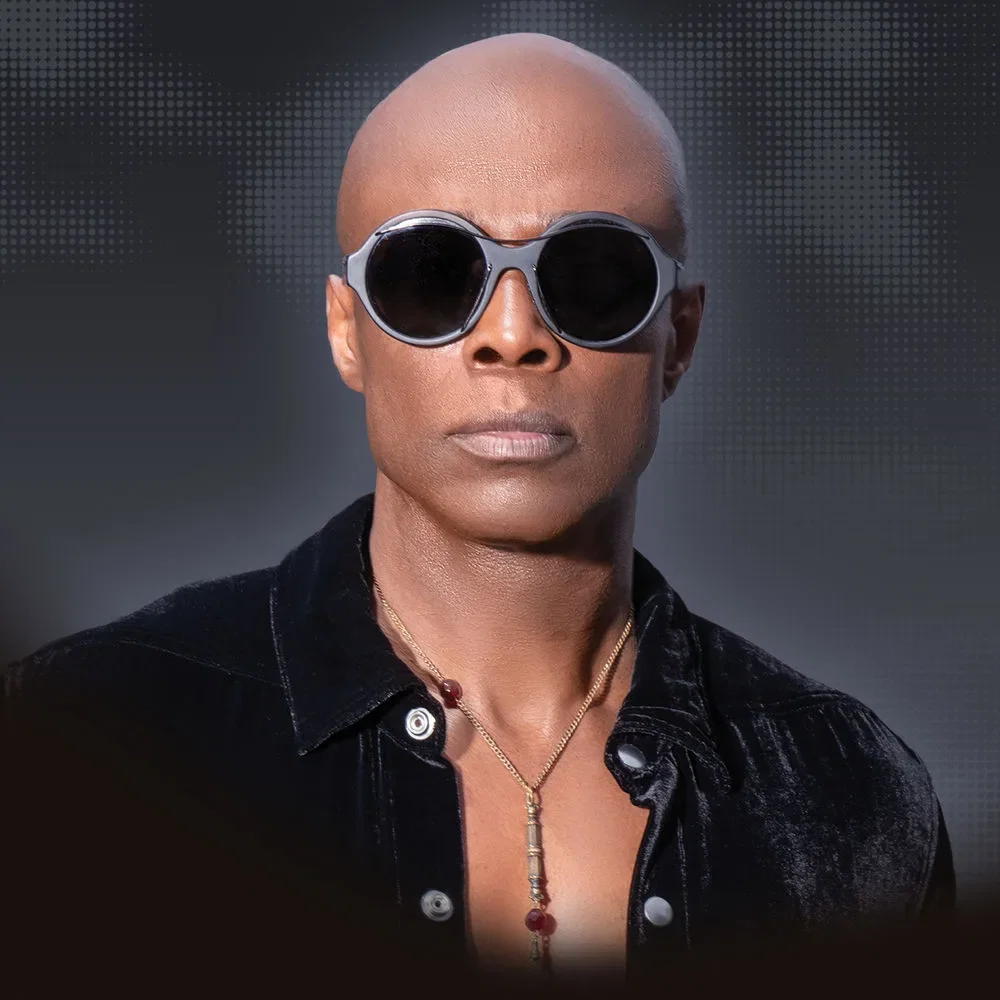 #2
#2United States
6 editions · 2011–2024
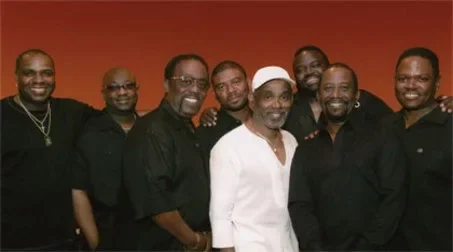 #3
#36 editions · 2010–2019