Ranking
#336

Ranking
#336
Followers
222.6 K
When
07–JUL 10, 2027
Featured artists
Lineup coming — we'll publish it as soon as it's confirmed.
Time left
11 editions to explore · future, live and past
 2027
2027Cruilla Barcelona 2027
Numbers, home base and house quirks
There is a point late in the afternoon at Parc del Fòrum when Barcelona begins doing part of the festival’s production work. The concrete still holds the July heat, the Mediterranean sits behind the stages and a sea breeze — when it arrives — changes the atmosphere almost instantly. One space might hold a guitar band with three decades of touring behind it; a short walk away could be contemporary pop, Catalan rap, African music, jazz or electronic music with no obvious reason to belong on the same bill. That coexistence is the central idea of Festival Cruïlla. Its name refers to a crossroads or intersection, and over the years the festival has done a surprisingly good job of preventing that word from becoming empty branding. The programme genuinely depends on things crossing that would otherwise remain separate.
The current festival begins in Barcelona in 2010, although its education started earlier. From 2005, a much smaller team had been organising Mataró, Cruïlla de Cultures around the Casa de la Música de Mataró, with a strong focus on world music and a series of themed nights running through the early summer. It was not yet the four-day July event known today. In 2008 and 2009, closing concerts were staged at Parc del Fòrum, and that relationship with Barcelona eventually changed the project’s scale. On July 17 and 18, 2010, the first Cruïlla Barcelona took place there permanently. Ben Harper, Femi Kuti, Kase.O and Love of Lesbian were among the artists, an opening combination that already made a clear statement about refusing a single musical category.
That refusal has survived better than any particular trend. Cruïlla never fully became Barcelona’s indie festival, electronic festival, urban festival or world-music festival. It has been comfortable allowing those audiences to overlap. Across its history, international rock veterans, mainstream pop stars, rappers, reggae artists, soul performers, Latin acts, jazz musicians and electronic producers have appeared without any one scene permanently taking ownership of the brand. The result can be difficult to summarise in one sentence, but that is also its competitive advantage. A four-day pass is partly a licence to change plans. Someone can arrive because of one headline artist and leave remembering a performer they had never intended to watch.
Parc del Fòrum shapes that behaviour. The huge waterfront complex is one of Barcelona’s defining festival spaces, connected to the city by metro, tram, buses and taxis rather than by campsite infrastructure. Cruïlla therefore never requires its audience to leave Barcelona behind and enter a sealed temporary world. People come from home, sometimes after working during the day, and return to the city when the night finishes. That local relationship matters enormously. In 2026, festival director Jordi Herreruela said roughly 95 percent of the audience was local, with around half coming from Barcelona itself and much of the remainder from the surrounding Catalan area. In a city where major music events often draw heavily international crowds, Cruïlla deliberately presents itself as a large Barcelona festival primarily for people who actually live there.
Over time, music also stopped being the only language in the programme. Comedy developed into a substantial parallel strand; visual arts brought installations, illustration and street art; dance received a dedicated stage; and in 2026 emerging fashion entered through a collaboration with 080 Barcelona Fashion. That could easily produce a cultural fair with no clear centre, but concerts remain the spine. The difference is that the hours between performances do not have to be filled only with food, drink and waiting. A visitor may pass a stand-up set, a dance performance or an artwork while moving between stages. Cruïlla treats those disciplines as changes of pace rather than decorations added to prove cultural breadth.
The same philosophy extends into production. By 2026, Cruïlla had spent four consecutive editions operating without diesel generators, using renewable electricity supplied through the Parc del Fòrum grid. Free drinking water, reusable cups and containers, redistribution of usable materials after dismantling and partnerships with social organisations form part of its sustainability plan. Accessibility measures include reserved viewing areas at all stages, accessible bars and toilets, wheelchair charging and hearing-loop systems for Deaf and hard-of-hearing guests. A festival attended by tens of thousands cannot make its footprint disappear, but the interesting part is that Cruïlla increasingly treats environmental and social responsibilities as logistical design problems rather than isolated campaigns.
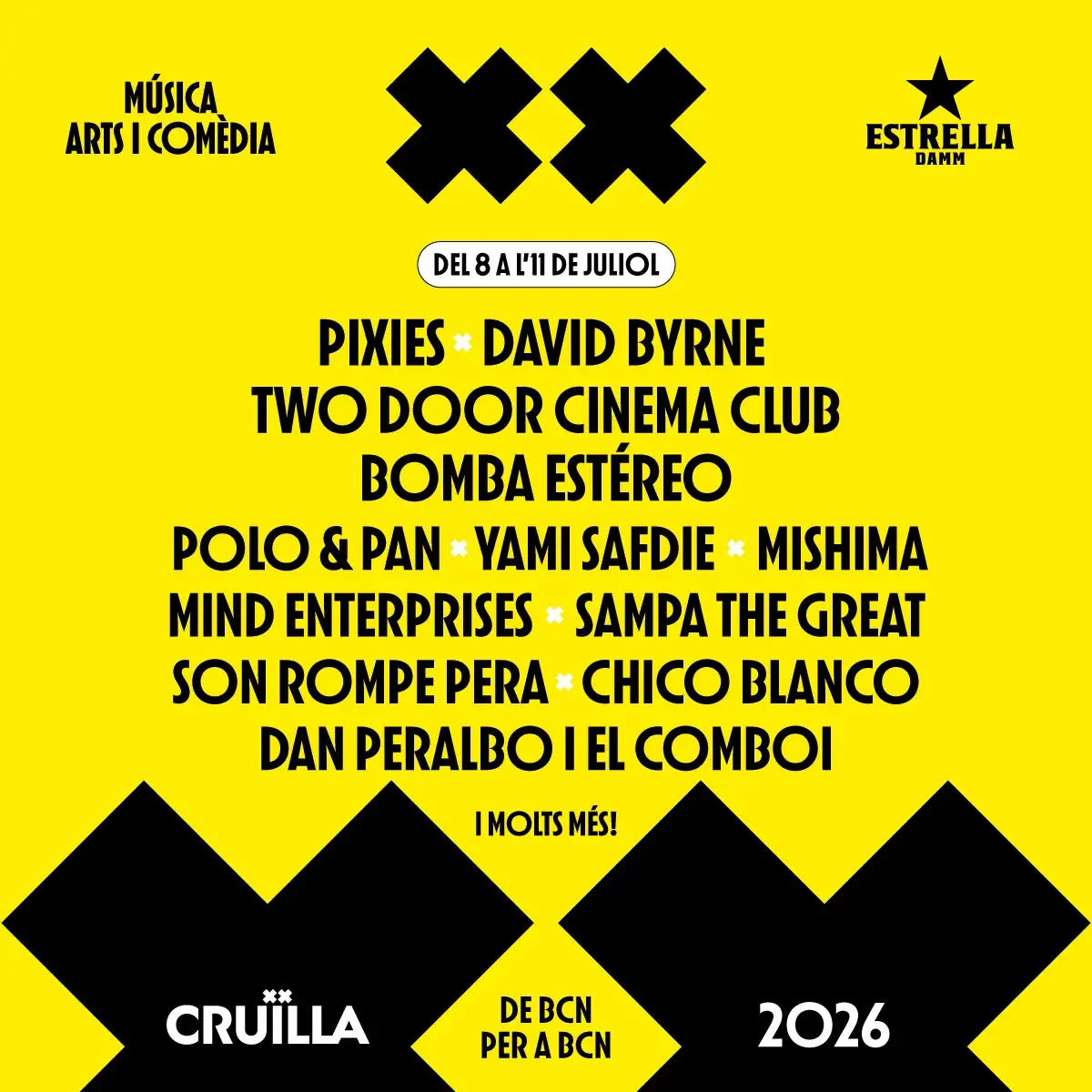
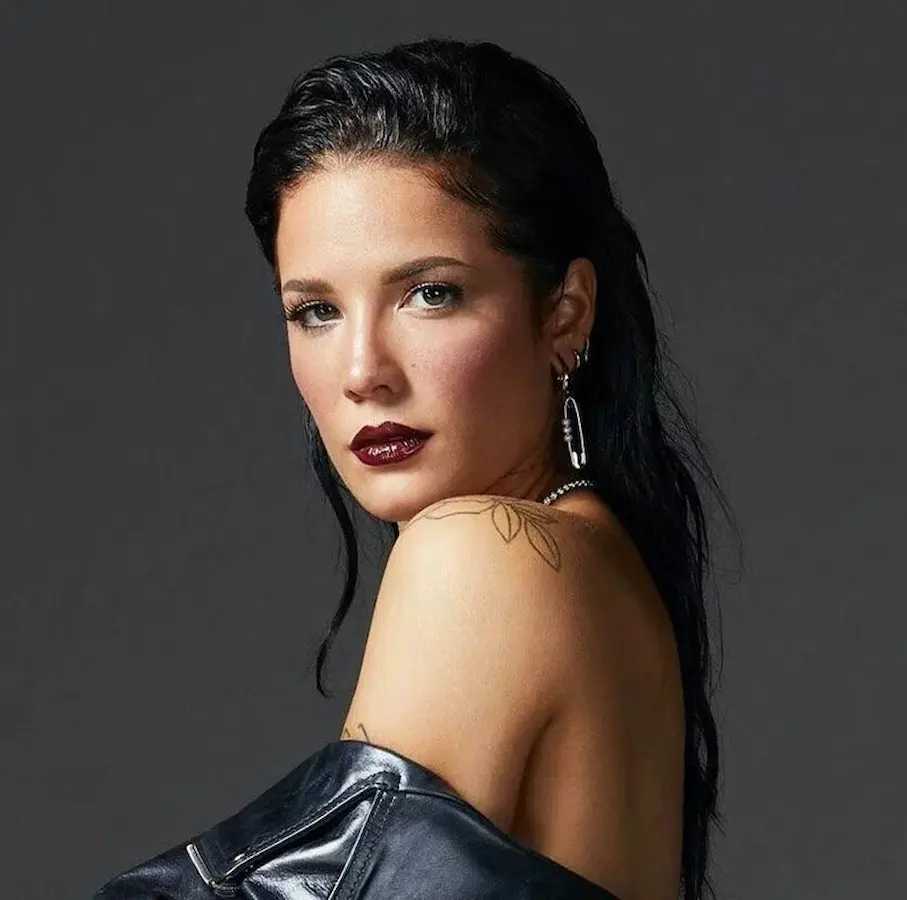
The 2026 edition made the festival’s refusal of genre particularly visible. Halsey and Reneé Rapp opened Wednesday from contemporary pop; Pixies, Suede, Garbage and Mishima shifted Thursday toward several generations of guitars. Friday could move between David Byrne, The Black Crowes, Bomba Estéreo, Ezra Collective, Zahara and Sampa the Great. Saturday then placed Faithless, The Hives, Jovanotti, Jon Batiste, Rigoberta Bandini, Two Door Cinema Club and Polo & Pan within the same closing day. Around 73,000 people attended across four days. That was below the roughly 82,000 record set during the 2025 fifteenth anniversary, but the organisers publicly resisted treating lower attendance as failure, emphasising comfort, local identity and the quality of the programme rather than endless growth.
The next crossroads already has dates: July 7–10, 2027. The full lineup has not yet been revealed, so there is no way to know exactly which direction the following edition will take. That uncertainty suits Cruïlla. Since 2010, its identity has depended less on promising the same sound every summer than on giving Barcelona enough possibilities to change its mind during an evening. Sometimes the festival’s best explanation happens between stages: someone walks toward an artist they already know, hears something unfamiliar on the way, stops for five minutes and never reaches the original plan. Cruïlla has spent more than fifteen years turning that interruption into the point.
Timeline
One artist per year — highest ranked in our archive
Those who appear most across this franchise's editions.
 #1
#1Colombia
2 editions · 2023–2026
 #2
#2Spain
2 editions · 2023–2026
#32 editions · 2023–2026